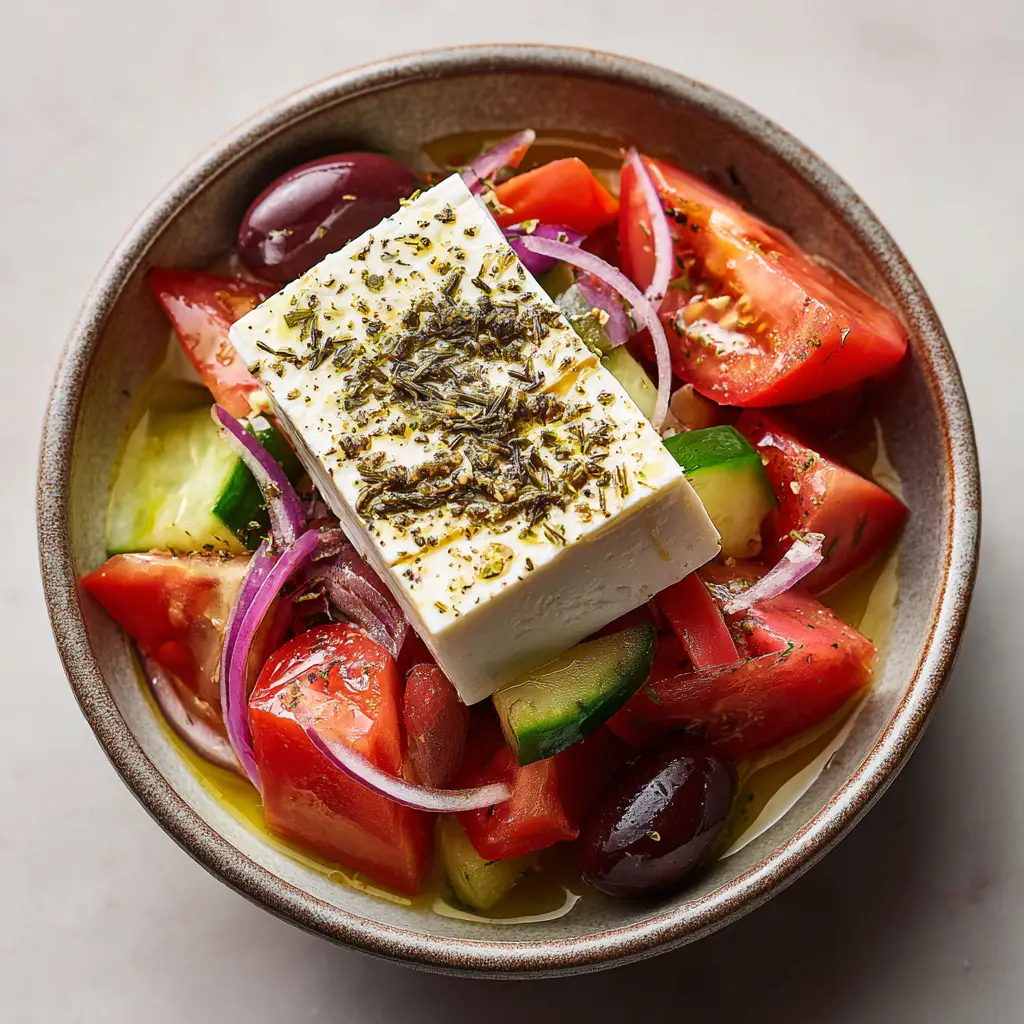
There is nothing quite like a truly Authentic Greek Salad, known in Greece as Horiatiki. This isn’t your typical garden salad weighed down by wilted lettuce and watery dressing. Instead, it is a vibrant, sun-drenched celebration of peak-summer produce, featuring chunky tomato wedges and thick cucumber slices that bite back. If you are looking for a dish that transports you to a seaside taverna in Mykonos, this Authentic Greek Salad is the ultimate recipe to master.
The beauty of this recipe lies in its simplicity and the high-quality ingredients that define Mediterranean cuisine. This salad is naturally gluten-free, vegetarian, and serves as the perfect centerpiece for your next gathering. Whether you are prepping easy vacation meals or looking for a crisp side to pair with a shrimp rice bowl, the Horiatiki is a timeless classic that never fails to impress.
Why You Will Crave This Traditional Horiatiki
- Explosive Visual Textures: The contrast between the deep red chunky tomato wedges and the crisp, unpeeled green cucumber half-moons creates a stunning rustic aesthetic.
- Bold Flavor Profile: Briny whole Kalamata olives and sharp red onion slivers provide a punchy counterpoint to the creamy feta.
- The Iconic Feta Block: Unlike Americanized versions, we use a large, thick rectangular block of white feta cheese placed right on top, allowing you to break off exactly as much as you want.
- Pure Gold Dressing: A generous drizzle of extra virgin olive oil creates a luxurious mouthfeel that pools beautifully at the bottom of the bowl.
The Anatomy of an Authentic Greek Salad: Key Ingredients
Vine-Ripened Chunky Tomato Wedges
In a traditional Authentic Greek Salad, the tomatoes are the star. Use the most fragrant, vine-ripened tomatoes you can find. We slice them into irregularly sliced ripe red tomato wedges to ensure every bite is juicy and substantial. You need approximately 1 lb (450g) of tomatoes to provide that essential acidic base.
Crisp, Unpeeled Cucumber Half-Moons
Authenticity requires keeping the skin on. The unpeeled skin provides a necessary snap and structural integrity. We cut 1 large (300g) cucumber into thick half-moons of unpeeled crisp green cucumber. This ensures the salad stays crunchy even after sitting for a few minutes in the dressing.
Thin Red Onion Slivers
To prevent the onion from overpowering the dish, we use 1/2 small red onion (50g) sliced into thin red onion slivers. If the onion is particularly sharp, you can soak the slivers in ice water for ten minutes before adding them to the bowl to mellow the bite.
Whole Kalamata Olives
Never use canned black olives here. You want 1/2 cup (75g) of plump, dark purple Kalamata olives. Leaving them whole prevents them from coloring the rest of the ingredients and preserves their briny, almond-shaped glory.
The Feta Cheese Block
This is the “crown” of the Authentic Greek Salad. Instead of crumbles, we use one 7 oz (200g) large, thick rectangular block of white feta cheese. Look for Greek feta made from sheep’s milk for the most authentic, tangy flavor profile.
The Finishing Touches: Oregano and Olive Oil
We finish the dish with a heavy dusting of dried green oregano flakes and 1/3 cup (80ml) of golden, translucent extra virgin olive oil. The oil should pool slightly at the bottom, creating a delicious “juice” that is meant to be mopped up with crusty bread.
Mastering the Horiatiki Technique: Step-by-Step Instructions
Step 1: Prep the Base Vegetables
Start by washing your produce in cold water. Take your tomatoes and cut them into chunky, irregularly sliced wedges. Do not worry about perfection; the rustic look is what defines an Authentic Greek Salad. Place them directly into a shallow ceramic bowl. Next, slice your cucumber into thick half-moons, keeping the skin intact for that signature crunch.
Step 2: Layer the Aromatics and Olives
Scatter the thin slivers of red onion over the tomatoes and cucumbers. Follow this by adding the plump, dark purple Kalamata olives. At this stage, you will begin to see the vibrant color palette that makes this dish so Pinterest-worthy. If you are looking for more Mediterranean inspiration, this salad pairs perfectly with our mediterranean chicken marinade for a complete feast.
Step 3: The Traditional Feta Placement
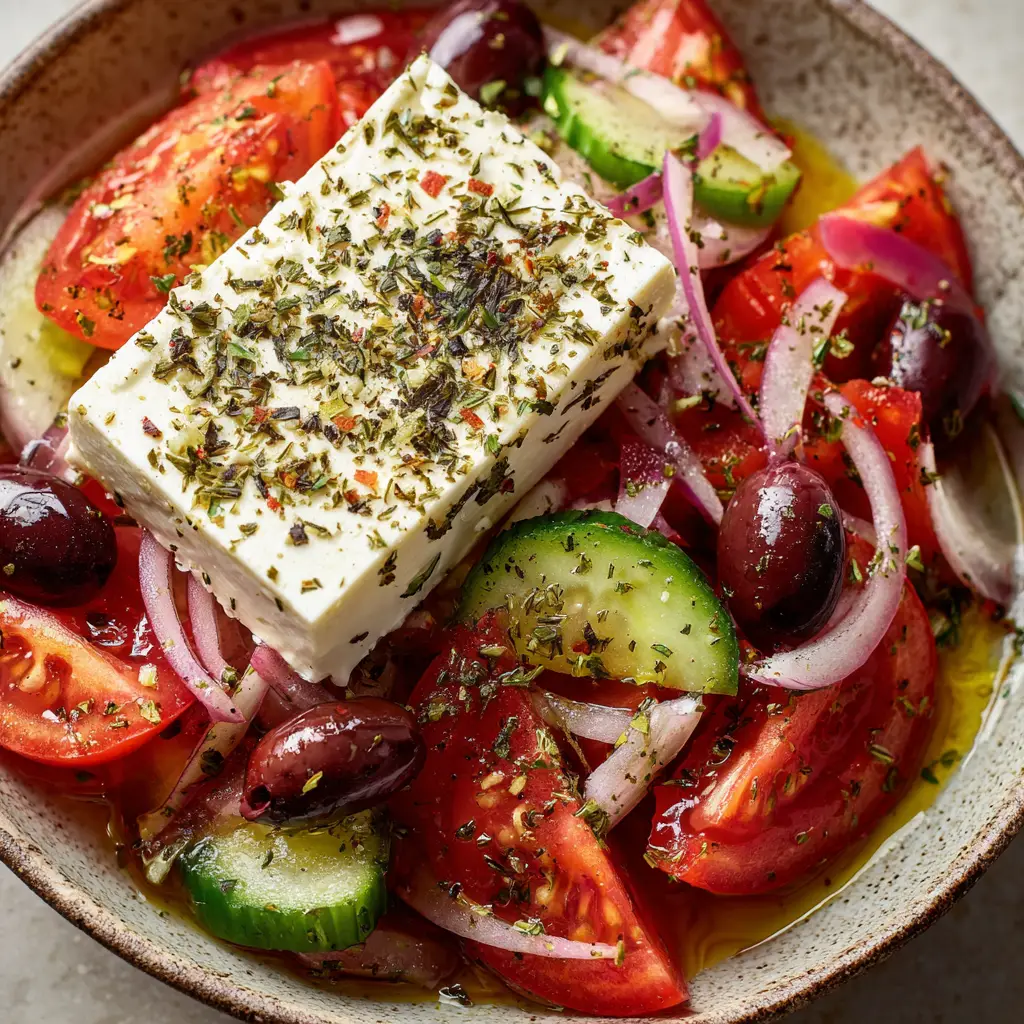
Place the large, thick rectangular block of white feta cheese prominently on top of the vegetables. It should sit like a centerpiece. This is the visual cue that signals to everyone that this is a real Horiatiki. For those who enjoy a different flavor profile, you might also like our thai chickpea salad, but today, we are sticking to the classics.
Step 4: The Final Flourish
Now, take your dried green oregano flakes and dust the feta block and the surrounding vegetables heavily. The herb’s fragrance will bloom as soon as it hits the moisture of the vegetables. Finally, perform a generous drizzle of golden, translucent extra virgin olive oil. Watch as it coats the feta and pools at the bottom of the rustic bowl.
Expert Tips for the Perfect Authentic Greek Salad
- Room Temperature is Key: Never serve your tomatoes straight from the fridge. Let them come to room temperature to unlock their full sweetness and aroma.
- Salt the Tomatoes Early: Lightly salt the tomato wedges 5 minutes before adding the other ingredients. This draws out the juices that mix with the olive oil to create the world’s best “dressing.”
- Quality Matters: Since there are so few ingredients, the quality of your olive oil can make or break the dish. Use a cold-pressed, Greek extra virgin olive oil if possible.
- No Vinegar Needed: While many Western versions use red wine vinegar, a true Horiatiki relies on the acidity of the tomatoes. However, a tiny splash won’t hurt if your tomatoes aren’t quite peak-season.
Storage, Reheating, and Meal Prep
The Authentic Greek Salad is best enjoyed immediately while the vegetables are at their crispest. However, if you have leftovers, they can be stored in an airtight container in the refrigerator for up to 24 hours. Note that the cucumbers will soften slightly. This salad does not freeze well and should not be reheated.
For meal prep, you can slice the cucumbers and onions ahead of time, but wait to slice the tomatoes and add the olive oil until just before serving to maintain the best texture. If you love fresh vegetable dishes, you should also try our peach burrata salad for a sweet and savory alternative.
What to Serve with Authentic Greek Salad
This salad is incredibly versatile. It is the traditional accompaniment to grilled lamb, souvlaki, or roasted lemon potatoes. For a lighter lunch, serve it alongside some pita bread and hummus. It also makes a fantastic side for a shrimp rice bowl or even a rich street corn chicken casserole to add a refreshing, acidic contrast.
Frequently Asked Questions
An authentic Horiatiki doesn’t use a premixed dressing. The ‘dressing’ is naturally created by the juices of the salted tomatoes mixing with high-quality extra virgin olive oil.
No, to keep it authentic, the feta should be served as a large, thick rectangular block or several large slices placed on top of the vegetables.
Use vine-ripened, meaty tomatoes like Beefsteak or Roma. They should be ripe but firm enough to hold their shape when cut into chunky wedges.
Traditional Greek Horiatiki (village salad) is a summer dish that focuses on what is seasonally available in Greek gardens. Lettuce is a cool-weather crop and was never part of the original rustic recipe.
Leaving the skin on provides a better crunch and rustic texture that is essential to the character of a village-style salad.
Bring the Mediterranean Home: Authentic Greek Salad Recipe
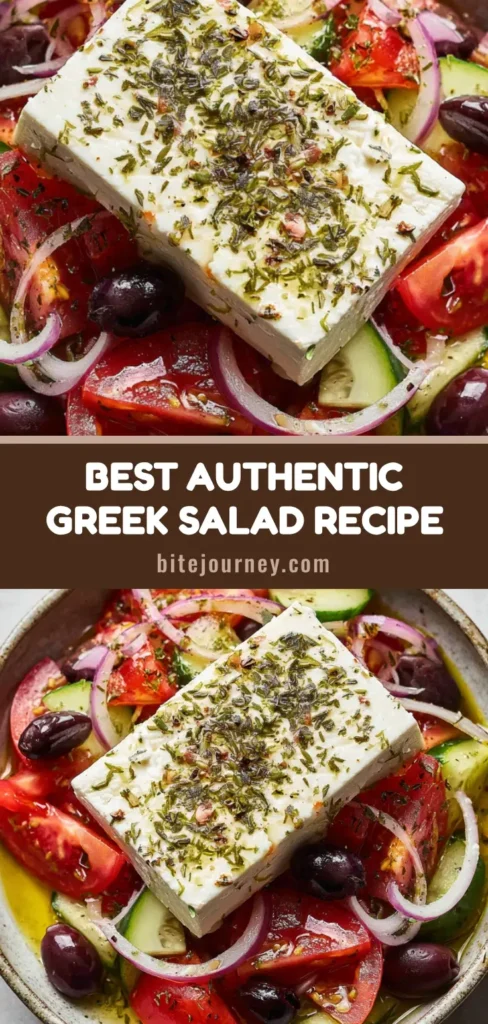
Authentic Greek Salad (Traditional Horiatiki Recipe)
Ingredients
Equipment
Method
- Slice the tomatoes into chunky, irregular wedges and the cucumber into thick half-moons. Place them in a shallow rustic bowl.
- Scatter the thin red onion slivers and whole Kalamata olives over the base vegetables.
- Place the whole block of feta cheese directly on top of the salad.
- Dust the entire salad generously with dried oregano and drizzle the extra virgin olive oil over the top until it pools slightly at the bottom.
Notes
Do not crumble the feta; serving it as a block is the traditional Greek way.
Share Your Culinary Journey!
We hope this Authentic Greek Salad brings a taste of Greece to your kitchen! If you loved the rustic textures and bold flavors, please save this recipe to your Pinterest boards so you can find it whenever the craving hits. Don’t forget to follow Bite_Journey for more global-inspired recipes. We would love to see your creations—share a photo of your salad in the comments below and leave us a 5-star rating if you enjoyed it!