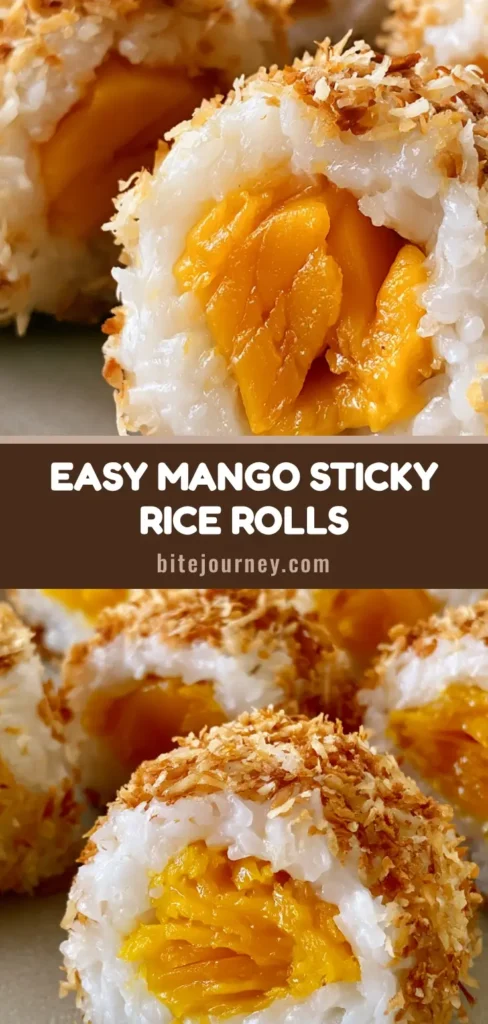
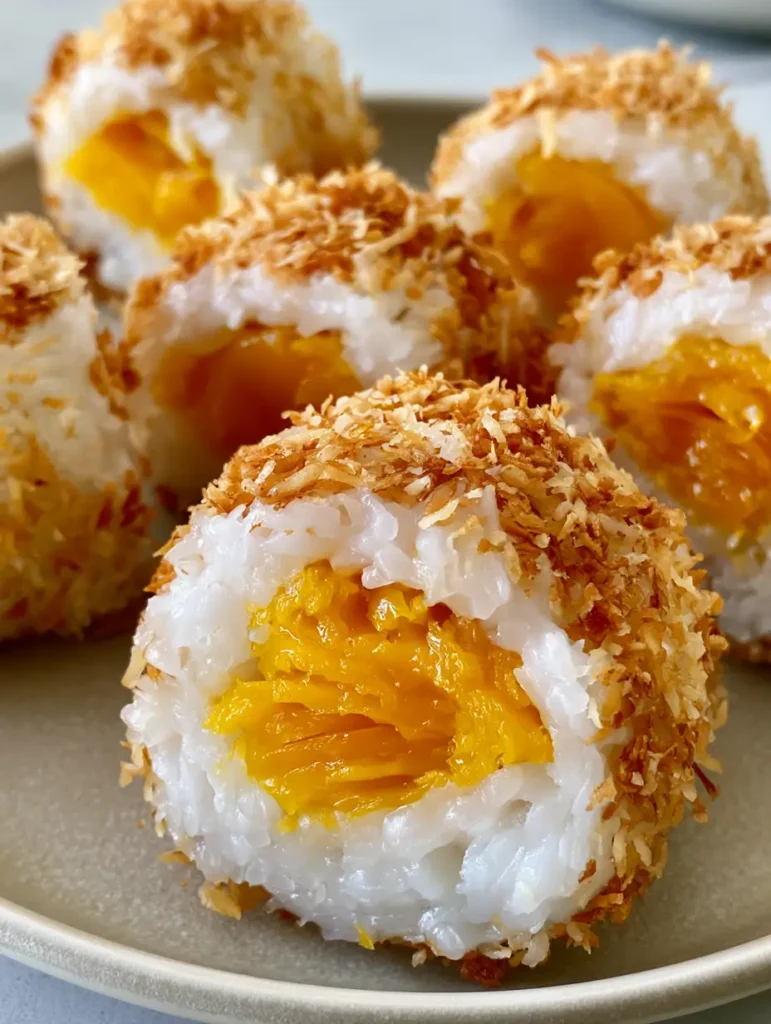
Mango Sticky Rice Rolls are the ultimate handheld evolution of the classic Thai dessert, Khao Niao Mamuang. Imagine the sweet, creamy comfort of coconut-infused glutinous rice paired with the vibrant, sun-ripened tang of fresh mango, all rolled into a portable bite and coated in a golden crunch. These Mango Sticky Rice Rolls aren’t just a treat for the palate; they are a visual masterpiece designed to stop the scroll on Pinterest and bring authentic Southeast Asian flavors directly into your kitchen.
When you take that first bite, you experience the chewy, translucent texture of perfectly steamed rice, followed by the burst of juicy mango. The toasted coconut exterior adds a nutty aromatic layer that elevates this dish from a simple street food staple to a gourmet dessert. Whether you are looking for cheap Saturday night dinner ideas to finish on a high note or a tropical party appetizer, these rolls are the answer.
Why These Mango Sticky Rice Rolls Are the Ultimate Summer Dessert
- Perfect Handheld Texture: Unlike the traditional bowl-served version, these rolls are firm enough to pick up but maintain a soft, melt-in-your-mouth rice foundation.
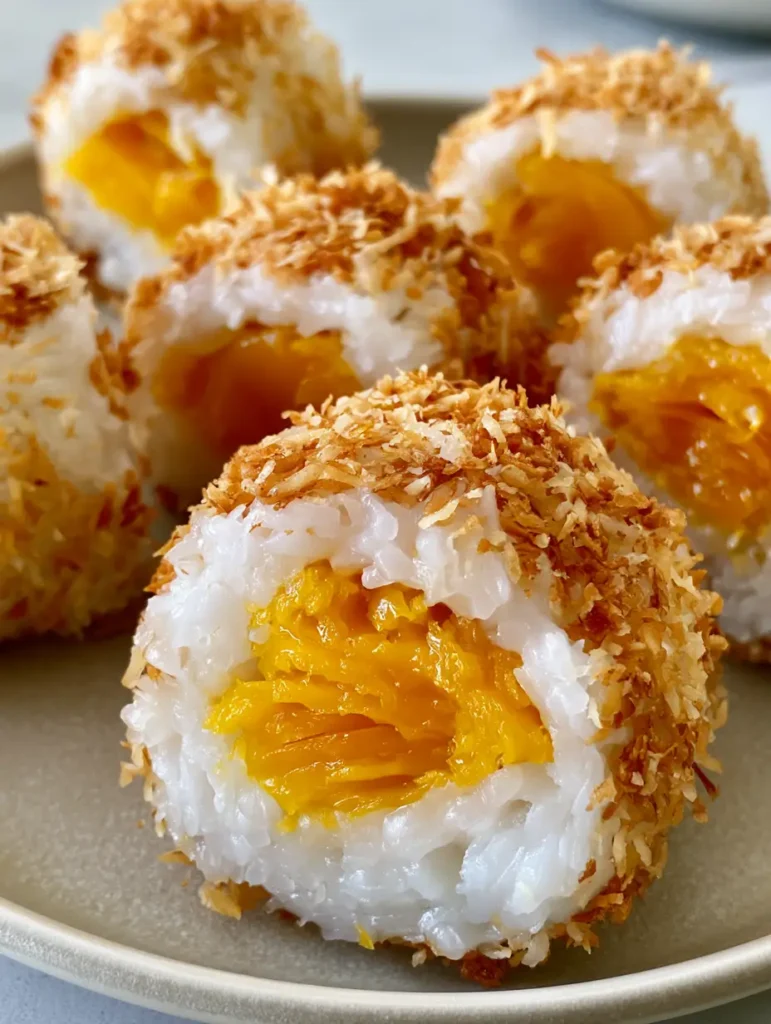
- Vibrant Visual Contrast: The bright orange of the ripe mango against the translucent white rice and the golden-brown toasted coconut makes for a stunning presentation.
- Naturally Vegan & Gluten-Free: Using coconut milk and glutinous rice makes this a crowd-pleasing option for almost any dietary restriction.
- The Golden Crunch: The addition of toasted shredded coconut provides a necessary texture break that traditional versions often lack.
If you love the combination of fruit and creamy textures, you might also enjoy our Honey Lime Chicken with Mango Salsa for a savory tropical twist.
The Essential Ingredients for Authentic Thai Mango Sticky Rice Rolls
To achieve the specific “translucent” look required for professional-grade Mango Sticky Rice Rolls, you must use high-quality Thai Long-Grain Glutinous Rice (also known as Sweet Rice or Sticky Rice). This is not the same as Jasmine rice; the high amylopectin content is what creates that signature chew.
Long-Grain Glutinous Rice: 2 cups (400g). This rice must be soaked for at least 4-6 hours to ensure the grains soften evenly without becoming mushy during the steaming process.
Full-Fat Coconut Milk: 1 can (400ml). Do not use “light” coconut milk. The fat content is essential for that rich, velvety mouthfeel and for creating a stable infusion that keeps the rice moist.
Granulated Sugar: 1/2 cup (100g). This provides the necessary sweetness to balance the natural acidity of the mango.
Sea Salt: 1/2 tsp (3g). A crucial “invisible” ingredient that sharpens the sweetness of the coconut and the mango.
Fresh Ripe Mangoes: 2-3 large (preferably Ataulfo or Champagne mangoes). Look for mangoes that are vibrant orange and give slightly to pressure. They should smell sweet at the stem.
Shredded Coconut: 1 cup (75g). We will toast this until golden brown to create the outer crust of our Mango Sticky Rice Rolls.
Mastering the Steam: Preparing the Sticky Rice Foundation
The secret to Mango Sticky Rice Rolls that hold their shape is the steaming technique. Boiling rice in a pot results in a starchy mess that won’t roll. Steaming allows each grain to remain distinct while becoming incredibly sticky.
Step 1: The Long Soak
Place your glutinous rice in a large bowl and rinse it under cold water at least 3-4 times until the water runs clear. This removes excess surface starch. Submerge the rice in fresh water and let it soak for at least 4 hours, or ideally overnight. This ensures the Mango Sticky Rice Rolls have a consistent, translucent texture.
Step 2: Steaming to Perfection
Drain the soaked rice and wrap it in a cheesecloth or place it in a bamboo steamer lined with parchment paper. Steam over boiling water for 20-25 minutes. At the halfway mark, carefully flip the bundle of rice to ensure even cooking. The rice is done when it looks translucent and tastes tender but chewy.
The Sweet Coconut Infusion
While the rice is steaming, prepare the “liquid gold” that transforms the grains. In a small saucepan over medium heat, combine the coconut milk, sugar, and salt. Stir constantly until the sugar is fully dissolved and the mixture is hot, but do not let it boil. Boiling can cause the coconut oil to separate, which will make your rice greasy rather than creamy.
Transfer the hot, freshly steamed rice into a glass bowl. Pour about 3/4 of the warm coconut mixture over the rice. Use a folding motion to incorporate the liquid. Cover the bowl with a lid or plastic wrap and let it sit for 20 minutes. The rice will “drink” the coconut milk, becoming plump and glossy—perfect for your Mango Sticky Rice Rolls.
If you find yourself craving more dessert rolls after this, our Cookies and Cream Cinnamon Rolls offer a completely different but equally decadent rolling experience!
How to Assemble the Perfect Mango Sticky Rice Rolls
Assembly is where the magic happens. To prevent sticking, keep a small bowl of water nearby to dampen your hands and your work surface.
Prepping the Mango and Coconut
Peel the mangoes and slice the flesh into long, uniform strips about 1/2 inch thick. In a dry skillet over medium-low heat, toast the shredded coconut. Stir constantly for 3-5 minutes until it reaches a beautiful golden-brown color and smells toasted. Spread the toasted coconut on a flat plate.
The Rolling Process
- Place a piece of plastic wrap or a bamboo rolling mat on your counter.
- Spread a thin, even layer of the coconut rice (about 1/4 inch thick) into a rectangle shape.
- Place 2-3 strips of mango in the center of the rice.
- Using the plastic wrap to assist you, lift the edge and roll the rice tightly over the mango, just like making a sushi roll.
- Press firmly to ensure the Mango Sticky Rice Rolls are compact and hold their shape.
The Final Golden Coating
Remove the roll from the plastic wrap. While the rice is still slightly tacky, roll the entire cylinder through the toasted coconut flakes. The coconut should adhere to the exterior, creating a generous, crunchy crust. Use a sharp, slightly wet knife to slice the roll into individual 2-inch rounds, or serve them as whole handheld logs for that authentic street-food feel.
Expert Tips for Success
- Wet Your Knife: When slicing the Mango Sticky Rice Rolls, wipe your knife with a damp cloth between every single cut. This prevents the sticky rice from tearing and keeps the edges clean and professional.
- Temperature Matters: Serve these rolls at room temperature. If you refrigerate them, the rice will harden. If you must make them ahead, keep them in an airtight container at room temperature for up to 4 hours.
- Mango Selection: Avoid fibrous mangoes. The Ataulfo variety is creamy and seedless-feeling, which is essential for the smooth texture of the roll’s center.
- The Salt Balance: Don’t skip the salt in the coconut milk. It is the secret to making the mango flavor “pop.”
Looking for a savory pairing for your Thai feast? Our Portuguese Grilled Chicken provides a smoky, spicy contrast to the sweet, cooling rice.
Storage and Reheating
Storage: Mango Sticky Rice Rolls are best enjoyed the day they are made. If you have leftovers, store them in an airtight container at room temperature for up to 6 hours. Refrigeration is not recommended as the glutinous rice undergoes retrogradation and becomes hard and chalky.
Reheating: If the rice has hardened, you can lightly steam the rolls for 1-2 minutes to soften them, though the mango will lose its fresh chill. It is better to store the components separately (rice and sliced mango) and assemble fresh.
What to Serve With Mango Sticky Rice Rolls
These rolls are quite rich, so they pair beautifully with light, acidic flavors. Serve them alongside a refreshing Mediterranean Pasta Salad for a fusion lunch, or as a sweet follow-up to Grilled Cod with Dill Sauce. For a full “finger food” party spread, consider adding Salted Caramel Pretzel Cheesecake Bites to your dessert table.
Frequently Asked Questions
They are best served within 4-6 hours. Do not refrigerate them, as the cold causes the rice starch to crystallize and become hard and unpalatable.
No, Jasmine rice does not have the necessary starch content to become ‘sticky’ and hold a roll shape. You must use Thai Long-Grain Glutinous Rice (Sweet Rice).
Keep a bowl of water nearby and lightly dampen your hands and the rolling surface. This prevents the starch from adhering to your skin.
Ataulfo (Champagne) mangoes are best because they are non-fibrous, buttery, and incredibly sweet, which makes for a clean bite in a roll.
Hard rice is usually the result of not soaking the grains long enough. Ensure you soak the rice for at least 4-6 hours to allow moisture to penetrate the core of the grain.
The Best Mango Sticky Rice Rolls Recipe
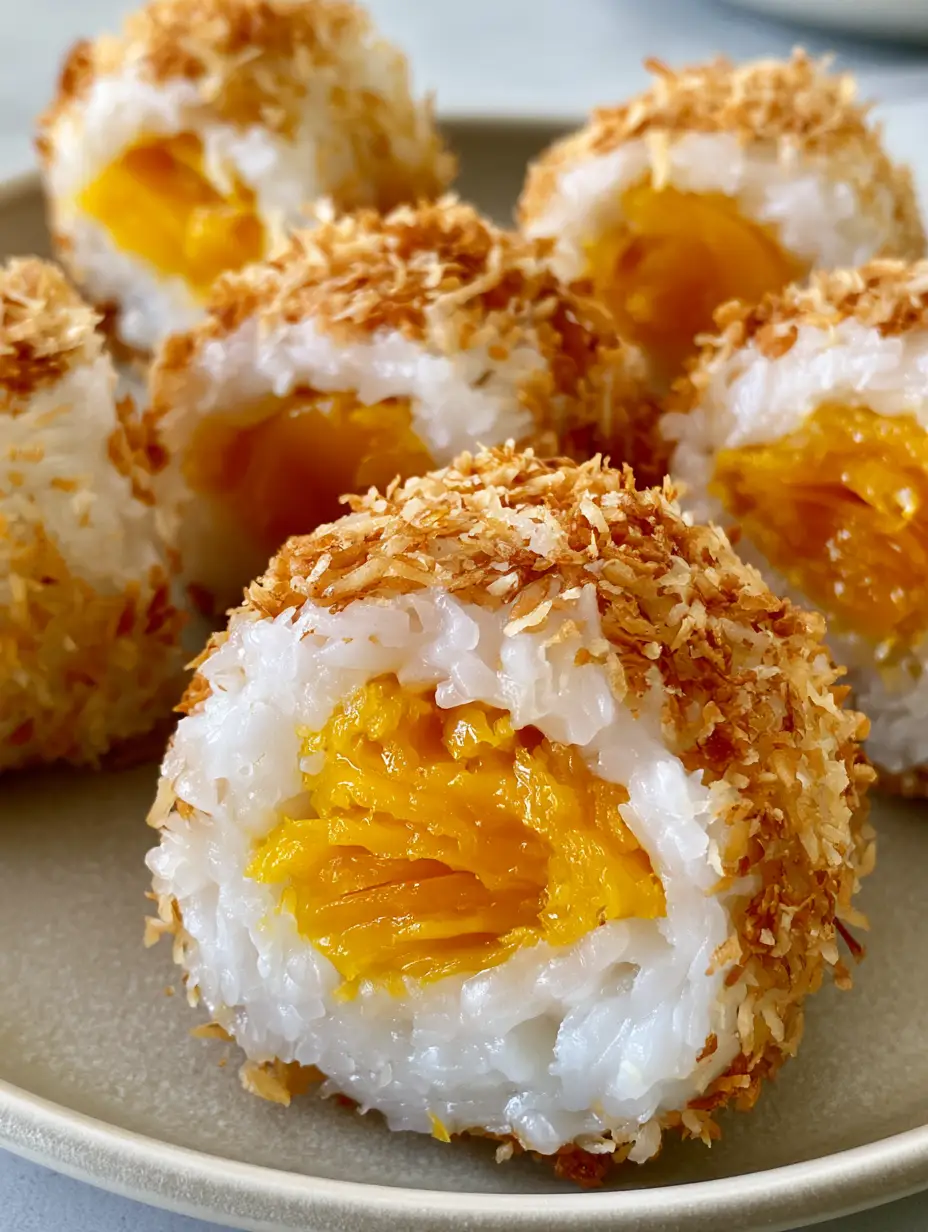
Mango Sticky Rice Rolls with Toasted Coconut and Fresh Mango
Ingredients
Equipment
Method
- Rinse glutinous rice until water runs clear, then soak in water for 4-6 hours or overnight.
- Steam the soaked rice in a lined steamer for 20-25 minutes until translucent and tender.
- Warm coconut milk, sugar, and salt in a pan until dissolved. Pour 3/4 over hot rice and let sit for 20 mins.
- Spread rice on plastic wrap, place mango strips in center, and roll tightly like sushi.
- Toast coconut until golden brown, then roll the rice cylinders in it to coat the exterior.
Notes
Use Ataulfo mangoes for a fiber-free creamy texture.
Save This Recipe To Pinterest!
Did you love these Mango Sticky Rice Rolls? Pin this recipe to your Dessert Boards or Thai Food Recipes board so you never lose it! Follow Bite_Journey on Pinterest for more daily culinary inspiration and “scroll-stopping” recipes. If you make these, please take a photo and share it in the comments below—we love seeing your kitchen creations! Don’t forget to leave a 5-star rating in the recipe card above to help other home cooks find this delicious treat.