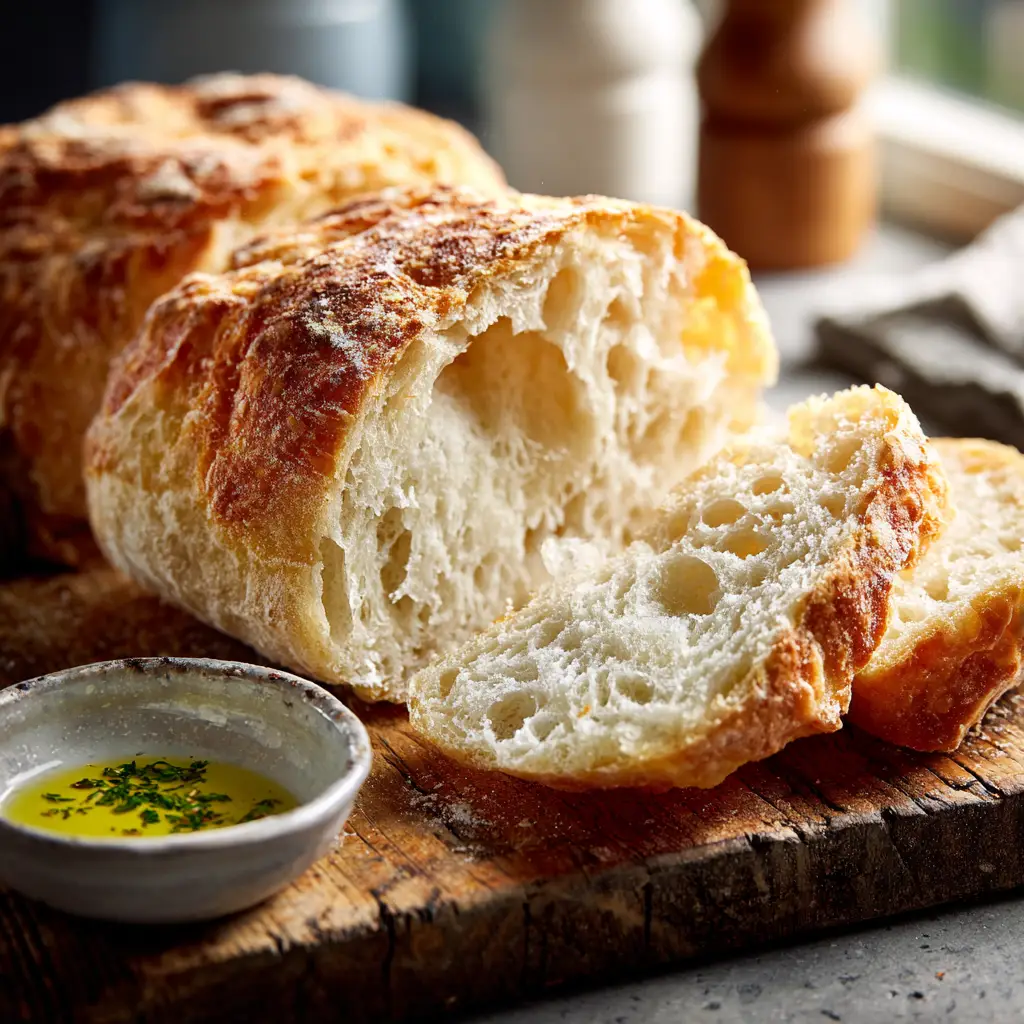
There’s a unique magic in slicing into a loaf of freshly baked Homemade Ciabatta Bread, the sound of the crackling crust giving way to a soft, airy interior riddled with beautiful, irregular holes. This isn’t just bread; it’s a rustic masterpiece that looks and tastes like it came straight from an artisan Italian bakery. Forget dense, disappointing loaves—this recipe is your definitive guide to achieving that mouth-watering, “perfectly imperfect” ciabatta you see in sun-drenched kitchens, ready to be dipped into a golden pool of olive oil and herbs.
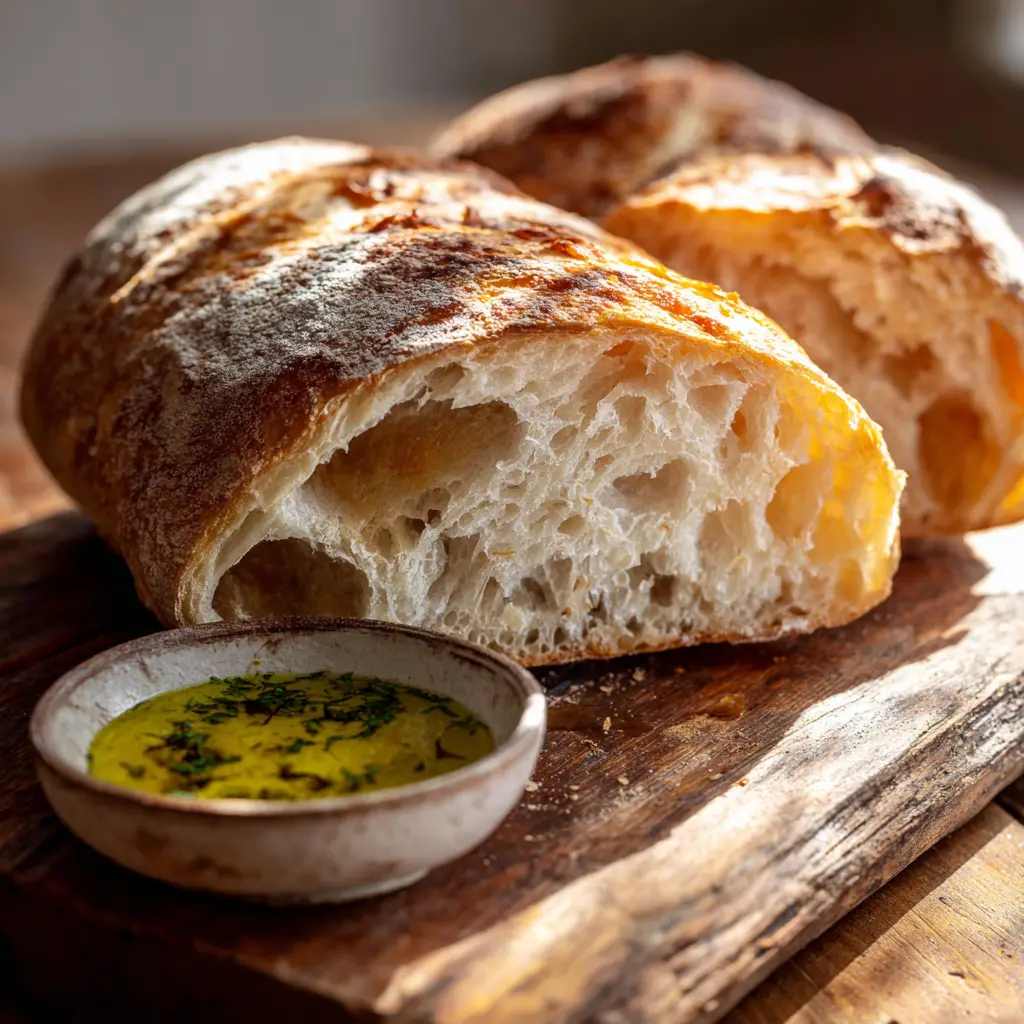
The visual appeal is undeniable: a deeply golden-brown crust that promises a satisfying crunch, and an open crumb structure that’s both hearty and light. This recipe is meticulously designed to replicate that exact experience, transforming simple ingredients into an authentic, show-stopping loaf.
Why This Recipe Delivers That Bakery-Perfect Look
This isn’t just another bread recipe. It’s a roadmap to achieving the specific textures and flavors that define authentic ciabatta. Here’s what you can expect:
- An Unbelievably Airy Crumb: Our high-hydration dough and long, slow fermentation process are the secrets to creating the large, glossy holes that are the hallmark of a true ciabatta.
- A Shatteringly Crisp, Golden Crust: We use a high-heat baking method with steam to create a crust that has that signature crackle and a beautiful, rustic, golden-brown finish.
- Rich, Complex Flavor: By using a “biga,” a simple pre-ferment, you’ll unlock a depth of flavor that quick, no-knead recipes simply can’t match.
- The “Perfectly Imperfect” Rustic Shape: This recipe embraces the authentic, free-form nature of ciabatta. No complex shaping is needed to achieve a beautiful, rustic loaf.
The Simple Quartet of Ingredients for Authentic Ciabatta
Authentic ciabatta relies on the quality of a few core ingredients working in harmony. Here’s the lineup.
For the Biga (The Flavor Foundation)
- Bread Flour: 1 cup (120g) – We use bread flour for its higher protein content, which is essential for developing the strong gluten needed to trap air bubbles and create that open crumb structure.
- Instant Yeast: 1/8 tsp – Just a tiny amount is needed to slowly activate the pre-ferment, developing flavor over time without becoming overly sour.
- Water: 1/2 cup (120ml), room temperature – Water is what brings the biga to life, beginning the fermentation process.
For the Main Dough
- Bread Flour: 3 cups (360g) – More bread flour forms the main structure of the loaf, providing the chew and support for the airy interior.
- Instant Yeast: 1/2 tsp – This is the primary leavening agent that will give our dough its powerful rise.
- Fine Sea Salt: 2 tsp (12g) – Salt is crucial not only for flavor but also for controlling the yeast’s activity and strengthening the gluten structure.
- Water: 1 1/2 cups (360ml), lukewarm – The high amount of water (high hydration) is the single most important factor for achieving the characteristic open crumb of ciabatta.
- Olive Oil: 2 tbsp (30ml) – A touch of good quality olive oil adds classic Italian flavor and helps create a softer, more tender crumb.
Essential Tools for Achieving a Flawless Ciabatta Crust
While you don’t need a professional bakery, a few key tools will make the process much smoother and guarantee a better result.
- Stand Mixer with Dough Hook: A high-hydration dough like this is very sticky and difficult to knead by hand. A stand mixer does the work effortlessly.
- Large Bowl: You’ll need a spacious bowl for the dough to triple in size during its first proof.
- Baking Stone or Steel: This is crucial for getting a powerful “oven spring” and a crisp, golden-brown bottom crust.
- Dough Scraper: Essential for handling and transferring the sticky, wet dough without deflating it.
Crafting Your Homemade Ciabatta Bread: A Step-by-Step Visual Guide
This process is spread over two days, but the active time is minimal. The magic happens during the long, patient resting periods.
Day 1: Cultivating Flavor with the Biga (Pre-Ferment)
The first step is creating the biga, which will ferment overnight and become the flavor backbone of your bread.
- In a medium bowl, combine 1 cup (120g) of bread flour and the 1/8 tsp of yeast.
- Pour in the 1/2 cup (120ml) of room temperature water and mix with a spatula until a stiff, shaggy dough forms and no dry flour remains.
- Cover the bowl tightly with plastic wrap and let it sit at room temperature for 12 to 16 hours. You’ll know it’s ready when it has risen, is bubbly, and has a pleasant, fermented aroma.
Day 2 Morning: Mixing and Developing the Dough
Now, we’ll combine the flavorful biga with the main dough ingredients.
- Tear the mature biga into small pieces and place them in the bowl of your stand mixer. Add the 3 cups (360g) of bread flour, 1/2 tsp yeast, salt, and lukewarm water.
- Using the dough hook attachment, mix on low speed for 2-3 minutes until a cohesive, shaggy dough forms.
- Increase the speed to medium-high and knead for 10-12 minutes. The dough will be very wet and sticky, but you should see it start to pull away from the sides of the bowl and develop a smooth, elastic sheen.
- Add the olive oil and continue to mix on medium-high for another 2-3 minutes until it’s fully incorporated. The dough will be very soft and supple.
- Transfer the dough to a large, oiled bowl, cover it, and let it rise for 1.5 to 2 hours, or until it has tripled in volume.
Day 2 Afternoon: Shaping and the Final Proof
This is where we gently handle the dough to create our rustic loaves.
- Generously flour your work surface. Carefully scrape the dough out of the bowl onto the surface, trying to deflate it as little as possible.
- Dust the top of the dough with more flour. Using a floured bench scraper, cut the dough in half.
- Gently stretch each half into a rough rectangular shape, about 10-12 inches long. The dough is delicate, so handle it with care.
- Carefully transfer each loaf to a piece of parchment paper. Let them rest, uncovered, for 30-45 minutes while your oven preheats. The loaves will spread and puff up slightly.
Day 2 Evening: The High-Heat Bake for a Perfect Crust
The final step is a hot, steamy bake to create that incredible crust and oven spring.
- Place a baking stone or steel on the middle rack of your oven and an empty metal pan (a broiler pan or cast-iron skillet works well) on the bottom rack. Preheat your oven to 450°F (232°C) for at least 45 minutes.
- Just before baking, carefully slide the parchment paper with the loaves onto the preheated baking stone.
- Pour 1 cup of hot water into the metal pan on the bottom rack to create steam, and quickly close the oven door to trap it.
- Bake for 20-25 minutes, or until the crust is a deep golden-brown and an instant-read thermometer inserted into the center reads 205-210°F (96-99°C).
- Let the ciabatta cool completely on a wire rack before slicing. This is crucial for the interior structure to set properly.
Troubleshooting and Tips for Ciabatta Perfection
- Don’t Rush the Fermentation: The long, slow fermentation of both the biga and the main dough is where all the flavor and texture develops. Patience is key!
- Embrace the Stickiness: This is a high-hydration dough, and it will be sticky. Use plenty of flour on your hands and work surface during shaping, and rely on your dough scraper.
- Ensure Your Oven is Hot Enough: A properly preheated oven and baking stone is non-negotiable for getting the oven spring and crispy crust that defines ciabatta.
- The Cooling Period is Crucial: Slicing into hot bread can result in a gummy texture. Waiting until it’s fully cooled allows the crumb to set, giving you those beautiful, distinct air pockets.
Keeping Your Artisan Ciabatta Fresh
Homemade ciabatta is best enjoyed the day it’s baked to fully appreciate its crispy crust. Once cooled, store it in a paper bag at room temperature for up to 2 days. Avoid plastic bags, as they can soften the crust.
To revive a day-old loaf, spritz it with a little water and bake in a 350°F (175°C) oven for 5-7 minutes until the crust is crisp again. For longer storage, you can slice the loaf and freeze it in an airtight container for up to 3 months. Reheat slices directly from the freezer in a toaster.
Perfect Pairings for Your Rustic Loaf
A loaf this good deserves the perfect partner. Of course, it’s divine simply dipped in high-quality olive oil with herbs. But it also makes an incredible foundation for sandwiches and is the perfect vessel for sopping up sauces.
It’s the perfect vessel for a hearty Garlic Bread Grilled Cheese or to dip into a warm bowl of White Lasagna Soup. For a fantastic appetizer, serve it alongside our Baked Spinach Artichoke Dip.
Your Ciabatta Questions, Answered
Yes, but it requires a different technique. Since the dough is too wet to knead traditionally, you would use a ‘stretch and fold’ method in the bowl every 30 minutes during the first 1.5-2 hour rise to build gluten strength.
The secret is high initial baking temperature combined with steam. Placing a pan of hot water in the oven creates a steamy environment, which keeps the crust soft at first for a better rise (‘oven spring’) before setting into a hard, golden, crunchy shell.
A biga is a stiff pre-ferment made from flour, water, and yeast. While you can find quicker recipes, using a biga is the traditional secret to developing the deep, complex flavor and authentic texture of genuine Italian ciabatta.
Bread flour is highly recommended. Its higher protein content (typically 12-14%) is essential for developing the strong gluten network needed to trap large air bubbles and create ciabatta’s signature holes.
A dense crumb is typically caused by low hydration or under-proofed dough. This recipe’s high water content and long, slow fermentation are specifically designed to develop the classic open and airy crumb structure.
Printable Recipe for Homemade Ciabatta Bread
Homemade Ciabatta Bread: The Secret to a Rustic, Airy Crumb
Ingredients
Equipment
Method
- In a medium bowl, combine 1 cup (120g) of bread flour and the 1/8 tsp of yeast.
- Pour in the 1/2 cup (120ml) of room temperature water and mix until a stiff, shaggy dough forms. Cover tightly with plastic wrap and let it sit at room temperature for 12 to 16 hours.
- Tear the mature biga into small pieces and place in the bowl of a stand mixer. Add the remaining bread flour, 1/2 tsp yeast, salt, and lukewarm water. Mix on low with a dough hook until a shaggy dough forms.
- Increase speed to medium-high and knead for 10-12 minutes until the dough is smooth and pulls away from the sides. Add the olive oil and mix for another 2-3 minutes.
- Transfer dough to a large, oiled bowl, cover, and let rise for 1.5 to 2 hours, or until tripled in volume.
- Generously flour your work surface and scrape the dough out. Dust the top with more flour and cut the dough in half.
- Gently stretch each half into a rough rectangular shape and transfer to parchment paper. Let rest, uncovered, for 30-45 minutes.
- Preheat oven to 450°F (232°C) with a baking stone on the middle rack and an empty metal pan on the bottom rack. Slide the parchment with the loaves onto the hot stone.
- Pour 1 cup of hot water into the bottom pan to create steam and quickly close the door. Bake for 20-25 minutes until deep golden-brown.
- Cool completely on a wire rack before slicing.
Notes
Embrace the Stickiness: This is a high-hydration dough; use plenty of flour on your hands and work surface.
Ensure Your Oven is Hot Enough: A properly preheated oven and baking stone is non-negotiable for a crispy crust.
The Cooling Period is Crucial: Slicing into hot bread can result in a gummy texture. Wait until it's fully cooled.

Share Your Masterpiece!
Now that you’ve crafted your own stunning loaf of Homemade Ciabatta Bread, it’s time to enjoy the rewards. The crunchy crust, the airy crumb—it’s a culinary achievement worth celebrating.
If you made this recipe, I’d love to see it! Leave a comment below with your results or tag your creations on Pinterest. Happy baking!