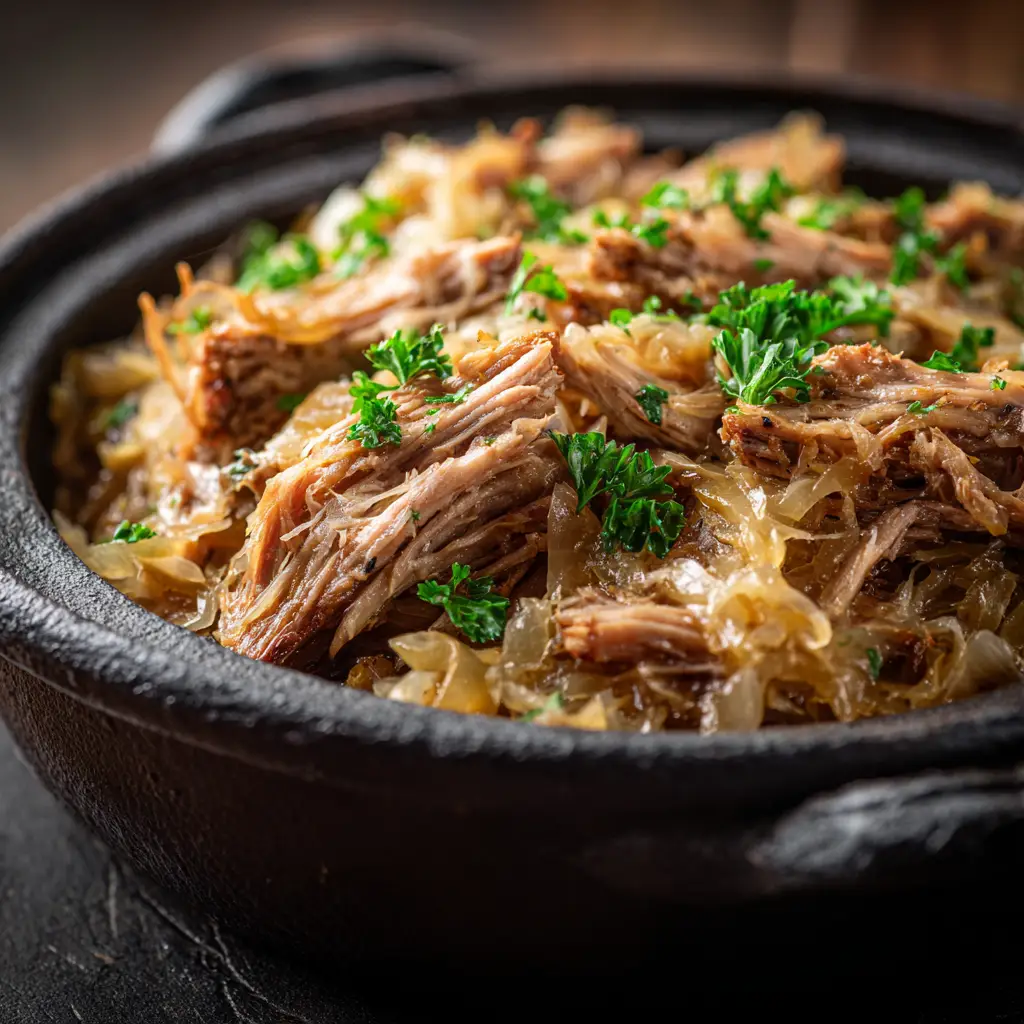
There is something undeniably comforting about a rustic dark cast iron pot simmering away on the stove. This Bavarian Braised Pork and Sauerkraut recipe brings the heart of Germany straight to your kitchen. The tender, juicy pork is slowly cooked until it effortlessly shreds with a fork.
When mixed with tangy, glistening sauerkraut, the flavors meld into a rich and savory masterpiece. A shallow depth of field in any pan would reveal the incredible, mouth-watering textures of the deeply browned meat. Finished with a sprinkle of fresh parsley, this dish looks and tastes like a home-cooked culinary triumph.
If you have been searching for a meal that feels both casual and incredibly inviting, this is it. The slow braising process works magic on inexpensive cuts of meat, transforming them into luxurious, melt-in-your-mouth bites. Grab your heavy pot, and let’s dive into the ultimate comfort food experience.
Why You’ll Love This Authentic Bavarian Recipe
- Melt-in-Your-Mouth Texture: The slow braising process ensures the pork shoulder becomes unbelievably tender and easily shreddable.
- Perfect Flavor Balance: The rich, savory fat of the pork beautifully balances the sharp, acidic tang of the glistening sauerkraut.
- One-Pot Wonder: Everything cooks together in a rustic dark cast iron pot, minimizing cleanup while maximizing flavor development.
- Visually Stunning: The deep mahogany crust on the meat, combined with translucent kraut and vibrant green parsley, makes this a show-stopping centerpiece.
- Incredible Leftovers: Like many braised dishes, the flavors of this Bavarian classic deepen and improve in the fridge overnight.
The Culinary Science of Braising Pork
Braising is a combination cooking method that relies on both dry and moist heat. First, you sear the meat at a high temperature to trigger the Maillard reaction. This chemical reaction creates the delicious, caramelized crust on the outside of the pork.
Once the crust is established, liquid is introduced, and the heat is lowered. This moist heat environment gently breaks down the tough connective tissues (collagen) in the pork shoulder. Over the course of a few hours, that collagen melts into rich gelatin.
This gelatin is what gives the braising liquid its luxurious, mouth-coating feel. It also provides the internal lubrication that makes the shredded pork taste incredibly juicy. Without this low-and-slow process, the meat would be tough and unappetizing.
Ingredients & Substitutions
To achieve the exact textures and visual appeal of this dish, you need the right foundational ingredients. Each element plays a crucial role in building the final flavor profile.
The Main Proteins & Produce
Pork Shoulder (Boston Butt): 3 lbs (1.4 kg), cut into large chunks. This cut has the perfect ratio of fat to lean meat for slow braising. The marbling ensures the meat stays juicy and shreds easily after hours in the oven.
Sauerkraut: 24 oz (680g), preferably high-quality refrigerated kraut. It provides the signature tang that cuts through the richness of the pork. It cooks down to become glistening and deeply flavored by the broth.
Yellow Onion: 1 large (about 150g), finely chopped. Onion adds a foundational savory sweetness. As it breaks down in the pot, it thickens the braising liquid naturally.
Garlic: 4 cloves (12g), minced. Garlic introduces a pungent, aromatic depth. It is essential for building a robust, authentic Bavarian flavor profile.
The Liquids & Aromatics
German Beer or Apple Cider: 12 oz (350ml). Used to deglaze the pan and lift the flavorful browned bits (fond) from the bottom. A dark lager adds earthy notes, while cider offers a subtle, authentic sweetness.
Beef or Chicken Broth: 1 cup (240ml). This provides the necessary liquid volume for the braise. It surrounds the meat with savory moisture, preventing it from drying out.
Caraway Seeds: 1 tsp (2g). This is the secret, invisible ingredient that screams “Bavarian.” It adds an earthy, slight anise-like flavor that pairs flawlessly with cabbage and pork.
Vegetable Oil or Lard: 2 tbsp (30ml). Necessary for searing the pork chunks at high heat. Lard is traditional, but a high-smoke-point vegetable oil works perfectly.
Fresh Parsley: 2 tbsp (5g), finely chopped. Added at the very end as a garnish. It provides a crucial pop of bright color and a fresh, herbaceous contrast to the heavy meat.
Kosher Salt and Black Pepper: 1 tsp (5g) each, or to taste. Foundational seasoning required to enhance all the other ingredients in the pot.
Equipment Needed
Having the right tools is essential for achieving the perfect sear and an even braise. These items will help you replicate that mouth-watering, home-cooked masterpiece.
- Large Cast Iron Dutch Oven: A heavy, dark cast iron pot retains heat beautifully and provides an even cooking environment for the braise.
- Sturdy Tongs: Essential for turning the heavy pieces of pork to ensure an even, golden-brown crust on all sides.
- Wooden Spoon: The best tool for safely scraping up the browned fond from the bottom of the pot during deglazing.
- Two Meat Forks: Required for effortlessly shredding the tender pork right in the pot once the cooking is complete.
Step-by-Step Instructions
Follow these precise steps to ensure your pork is meltingly tender and your sauerkraut is perfectly seasoned. Pay close attention to the sensory cues provided to achieve professional culinary results.
Step 1: Preparing and Searing the Pork
Begin by cutting the 3 lbs (1.4 kg) of pork shoulder into large 3-inch chunks. Pat the meat completely dry with paper towels. Moisture is the enemy of a good sear.
Generously season the pork on all sides with kosher salt and black pepper. Heat the 2 tbsp (30ml) of oil in your cast iron Dutch oven over medium-high heat until it begins to lightly smoke.
Carefully add the pork chunks in a single layer. Visual Cue: Let them sear undisturbed for 3-4 minutes per side until a deep, dark mahogany crust forms. Do not crowd the pan; work in batches if necessary.
Step 2: Building the Flavor Base
Once all the pork is deeply browned, remove it to a plate and leave the rendered fat in the pot. Lower the heat to medium. Add the chopped yellow onion to the hot fat.
Sauté the onions for about 5 minutes until they become translucent and begin to soften. Add the minced garlic and 1 tsp (2g) of caraway seeds. Cook for 1 more minute until the aromatics are highly fragrant.
Step 3: Deglazing the Pot
Pour the 12 oz (350ml) of beer or apple cider into the hot pot. It will immediately bubble and hiss. Use your wooden spoon to scrape the bottom of the pot vigorously.
You are lifting the “fond”—the concentrated, caramelized meat juices left from searing. This fond is packed with rich, savory flavor and is crucial for the final taste of the dish. Let the liquid reduce by half.
Step 4: The Braise
Drain the 24 oz (680g) of sauerkraut slightly, but do not rinse it completely, as you want to retain some of the tang. Stir the sauerkraut and 1 cup (240ml) of broth into the pot with the reduced liquid.
Nestle the browned pork chunks back into the pot, pushing them down into the glistening sauerkraut. Bring the liquid to a gentle simmer.
Cover the pot tightly with its heavy lid. Transfer the pot to a preheated 325°F (160°C) oven. Braise for 2.5 to 3 hours. Sensory Cue: The kitchen will smell earthy and savory. The meat is done when it offers absolutely no resistance to a fork.
Step 5: Shredding and Finishing
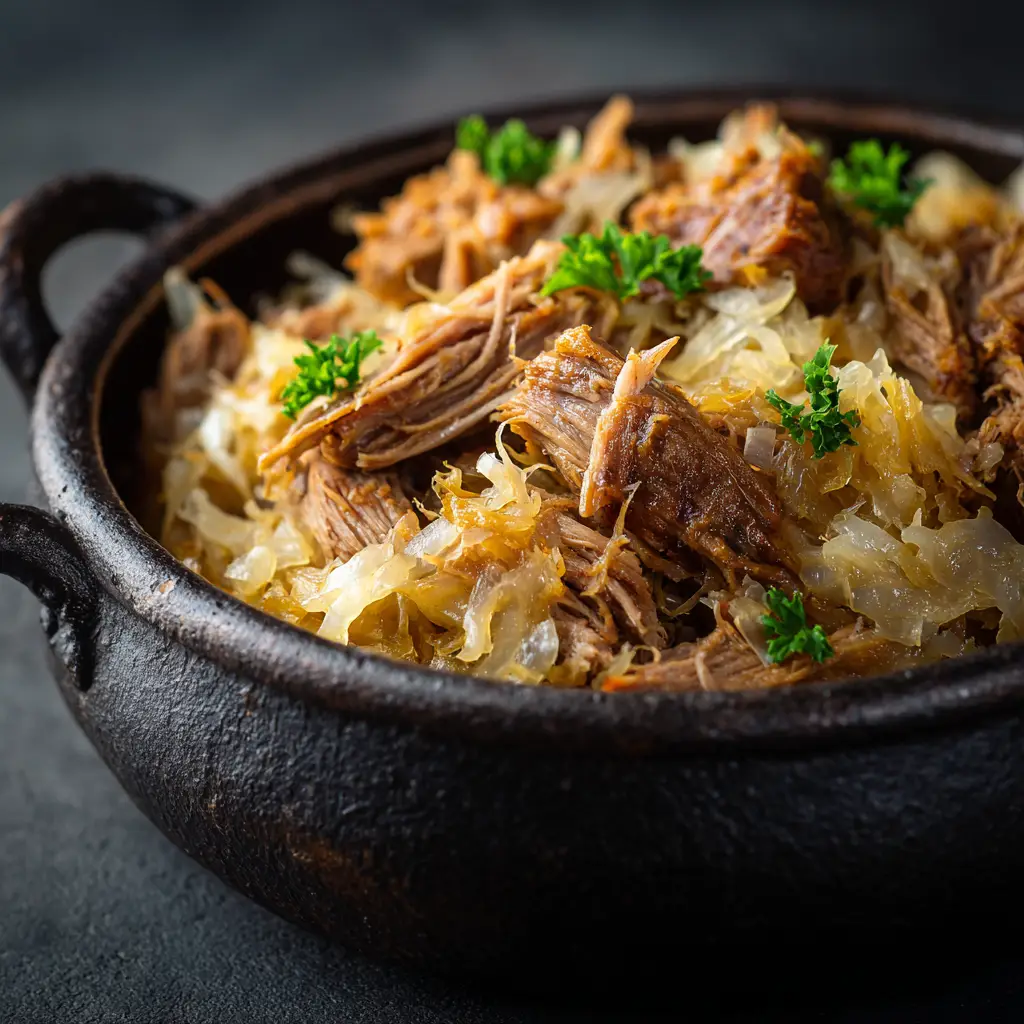
Remove the rustic dark pot from the oven. Using two forks, gently pull the pork chunks apart directly in the pot. The tender, juicy pork will easily shred.
Toss the shredded meat thoroughly with the hot, glistening sauerkraut so it absorbs the rich braising liquid. Taste for seasoning, adding a pinch of salt if necessary.
Scatter the fresh chopped parsley generously over the top. The vibrant green against the deep, rich textures of the meat makes for a casual, inviting, and mouth-watering presentation.
Expert Tips for Success
- Never Rush the Sear: Taking the time to build a dark, caramelized crust on the pork shoulder is non-negotiable. This crust provides a massive depth of flavor that carries the entire dish.
- Don’t Over-Drain the Kraut: The brine in the sauerkraut contains incredible flavor. Unless you are highly sensitive to acidity, avoid rinsing your sauerkraut under water.
- Test for Tenderness: If the pork does not easily pull apart with a fork after 2.5 hours, it isn’t done yet. Put the lid back on and braise for another 30 minutes. Tough pork simply needs more time.
- Use the Right Pot: A heavy cast iron Dutch oven is highly recommended. Thin-bottomed pots can cause the bottom layer of sauerkraut to scorch during the long cooking process.
- Let it Rest: Allowing the shredded pork to sit in the warm braising juices for 10-15 minutes before serving allows the meat fibers to reabsorb moisture, making it exceptionally juicy.
Storage & Reheating / Freezing
This Bavarian Braised Pork and Sauerkraut is an ideal make-ahead meal. The flavors actually continue to meld and deepen as it rests in the refrigerator.
To Store: Allow the dish to cool completely to room temperature. Transfer the pork, sauerkraut, and all remaining juices to an airtight container. Store in the refrigerator for up to 4 days.
To Reheat: For best results, reheat portions gently in a saucepan over medium-low heat. Add a splash of broth or water if the mixture looks dry. Heat until the meat is steaming hot throughout.
To Freeze: This dish freezes beautifully. Pack the cooled pork and sauerkraut into freezer-safe containers or heavy-duty freezer bags. Press out excess air and freeze for up to 3 months. Thaw overnight in the fridge before reheating.
What to Serve With This
This hearty German comfort food demands a robust supporting cast. The rich, savory juices pooling at the bottom of the pot are too good to waste. You absolutely need some crusty bread to soak up every drop. We highly recommend baking a fresh French baguette recipe or a rustic homemade ciabatta bread.
If you want to keep the meal lower in carbs or add some fresh vegetables, look toward simple, flavorful sides. Pan-roasted garlic butter mushrooms provide a wonderful earthy complement to the pork. Alternatively, crisp, savory crack green beans add a fantastic textural crunch.
Are you looking to build a massive feast for a crowd? Pair this dish with other comforting classics from our easy lazy dinners collection. A side of crockpot green bean casserole keeps things deeply savory. If you have guests who prefer beef, consider offering a smaller portion of crock pot cube steak alongside the pork.
For a slightly non-traditional twist, try serving the shredded Bavarian pork with a tangy ground beef and cabbage stir fry to double down on the hearty cabbage theme. It’s an unconventional but delicious pairing.
Finally, end this rich, acidic meal on a sweet, soothing note. A cool, creamy slice of loaf pan cheesecake is the perfect palate cleanser. If you prefer bite-sized sweets, our best fudge recipe will satisfy any chocolate cravings after a massive, savory dinner.
Frequently Asked Questions
Yes! To adapt this recipe for a slow cooker, sear the pork and sauté the aromatics in a skillet first. Then, transfer all ingredients to your slow cooker and cook on LOW for 7-8 hours until the pork shreds easily.
It is generally recommended to drain the sauerkraut but avoid rinsing it completely. Retaining some of the natural brine provides the essential acidic tang needed to balance the rich, savory fat of the pork.
Pork shoulder, also known as Boston butt, is the best cut for braising. Its high ratio of fat and connective tissue breaks down during slow cooking, resulting in incredibly tender, juicy, and shreddable meat.
A traditional German dark lager (Dunkel) or a crisp Pilsner works beautifully. If you prefer an alcohol-free alternative, apple cider is highly recommended as it adds a complementary subtle sweetness.
If your pork is tough, it simply hasn’t cooked long enough. The collagen in pork shoulder requires extended time at a low temperature to melt into gelatin. Put the lid back on and continue cooking for another 30-45 minutes.
Closing Thoughts on This Comfort Classic
There is nothing quite as satisfying as pulling a heavy, rustic dark pot from the oven and revealing a home-cooked masterpiece. This Bavarian Braised Pork and Sauerkraut hits all the right notes for a comforting, hearty dinner.
The combination of tender, shredded pork and glistening, tangy sauerkraut is truly a timeless culinary pairing. We hope this dish brings warmth and deliciousness to your kitchen table.
If you loved this recipe, please leave a comment and a 5-star rating below! Don’t forget to subscribe to our newsletter for more incredible weeknight dinners and slow-braised weekend projects. Be sure to save this recipe to your favorite Pinterest boards so you can make it again!

Recipe
The Ultimate Bavarian Braised Pork and Sauerkraut Recipe
Ingredients
Equipment
Method
- Cut the pork shoulder into large 3-inch chunks and pat dry. Season with salt and pepper. Heat oil in a cast iron Dutch oven over medium-high heat. Sear the pork chunks for 3-4 minutes per side until a deep mahogany crust forms. Remove the pork and set aside.
- Lower heat to medium. In the remaining fat, sauté the chopped onion for 5 minutes until translucent. Add the minced garlic and caraway seeds, cooking for 1 more minute until fragrant.
- Pour the beer or apple cider into the pot. Vigorously scrape up the browned bits (fond) from the bottom using a wooden spoon. Let the liquid reduce by half.
- Stir the slightly drained sauerkraut and broth into the pot. Return the pork chunks to the pot, nestling them into the kraut. Bring to a simmer, cover tightly, and transfer to a 325°F (160°C) oven. Braise for 2.5 to 3 hours until the meat is fork-tender.
- Remove from the oven. Using two forks, shred the pork directly in the pot. Toss the meat with the hot sauerkraut and juices. Top generously with fresh chopped parsley before serving.
Notes
Tip 2: Allow the shredded meat to rest in the juices for 10 minutes before serving to absorb maximum moisture.