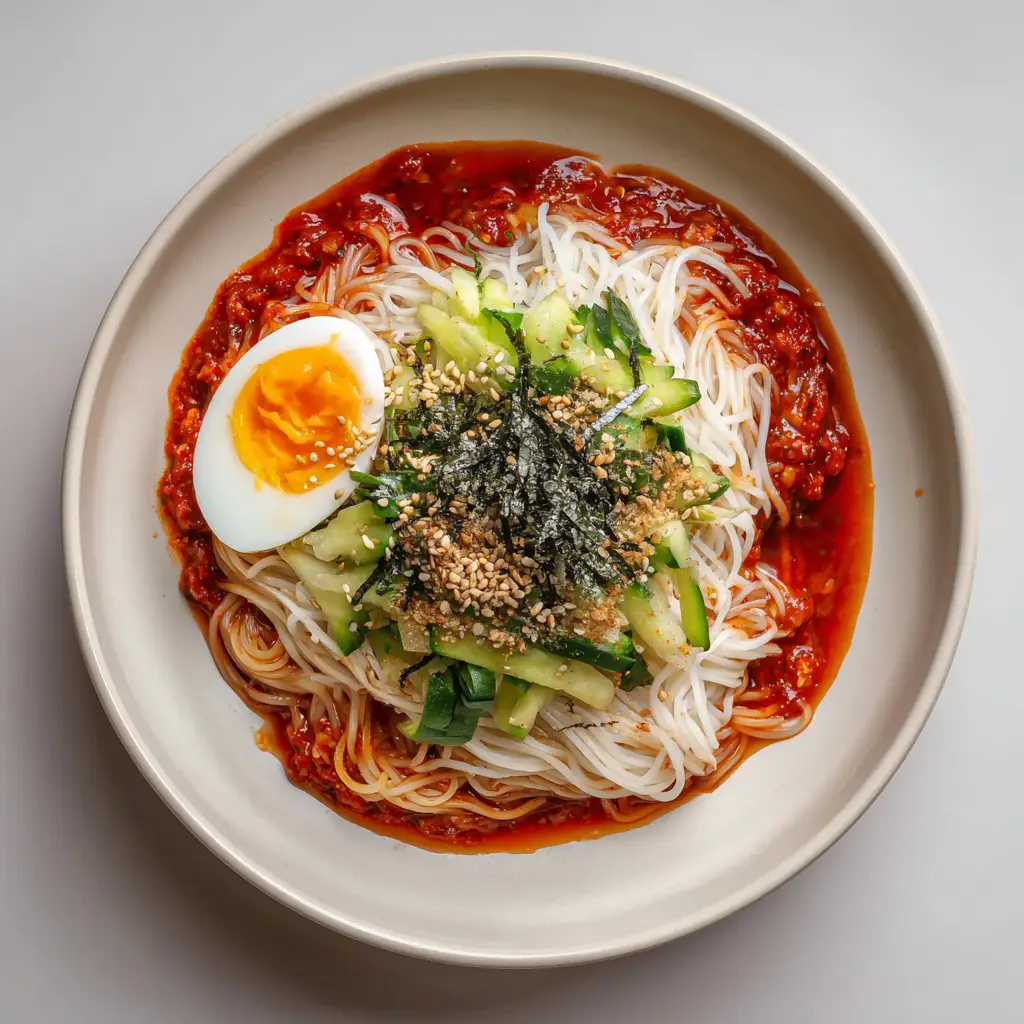
There is nothing quite like the first bite of Bibim Guksu on a warm afternoon. This classic Korean dish is defined by its vibrant crimson-red gochujang sauce that clings to every strand of thin wheat noodles. If you are looking for a meal that perfectly balances spicy, sweet, and tangy flavors while remaining incredibly refreshing, you have found it.
The visual appeal of this dish is just as important as the taste. Imagine a white ceramic bowl filled with tangled, glossy noodles, topped with a pile of fresh green cucumbers and a jammy egg with a translucent, orange yolk. It is a masterpiece of textures and colors that looks as good as it tastes. In this guide, we will break down exactly how to achieve that professional, photo-ready finish at home.
Whether you are a seasoned fan of Korean cuisine or a newcomer looking for a quick, high-impact meal, this recipe is designed for success. We will focus on the culinary science behind the sauce and the precise timing needed for those iconic toppings. Let’s dive into the world of Korean spicy cold noodles.
Why This Bibim Guksu Recipe Is a Total Game Changer
- The Perfect Gloss: Our sauce formulation uses a specific ratio of sweeteners and oils to ensure the noodles are reflective and vibrant, never dry or muted.
- Textural Contrast: We pair the soft, chewy somyeon noodles with the sharp, cooling crunch of fresh julienned cucumber for a multi-sensory experience.
- The Jammy Factor: We provide the exact scientific timing for a soft-boiled egg that yields a jammy, translucent yolk, adding a rich creaminess to the spicy base.
- 15-Minute Efficiency: This recipe is designed for modern home cooks, requiring minimal prep while delivering restaurant-quality depth of flavor.
The Anatomy of an Authentic Spicy Noodle Sauce
Thin Wheat Somyeon Noodles: These are the foundation of Bibim Guksu. They are delicate and white, providing a neutral canvas that allows the spicy sauce to shine. Using 7 oz (200g) of dry noodles is perfect for two servings.
Gochujang (Korean Chili Paste): This is the soul of the dish. It provides the base heat and that deep crimson color. We use 3 tbsp (45g) to ensure a thick, clinging consistency.
Rice Vinegar: Acidity is crucial to cut through the fermentation of the gochujang. 2 tbsp (30ml) of rice vinegar adds the necessary tang that makes this dish refreshing.
Toasted Sesame Oil: This “invisible” ingredient provides the glossy sheen seen in the visual blueprint. 1 tbsp (15ml) adds an earthy aroma and essential fat for mouthfeel.
Granulated Sugar and Honey: A combination of 1 tbsp (15g) sugar and 1 tbsp (15ml) honey creates a complex sweetness. The honey specifically contributes to the sauce’s reflective, thick nature.
Soy Sauce: Just 1 tbsp (15ml) provides the savory umami backbone that prevents the sauce from being one-dimensionally spicy.
Garlic: One finely minced clove (about 5g) adds a sharp, fresh aromatic kick that develops as it sits in the sauce.
Essential Tools for Korean Noodle Mastery
To achieve the specific “tangled” look of the noodles and the “julienned” precision of the cucumbers, you will need a few basic tools. A high-quality chef’s knife or a mandoline is essential for the cucumber to ensure the slices are thin and uniform. You will also need a fine-mesh strainer for rinsing the noodles under cold water—this step is non-negotiable for removing excess starch and stopping the cook.
A medium mixing bowl is required for whisking the sauce until it is smooth and reflective. Lastly, a small saucepan for the eggs and a large pot for the somyeon are the only heat sources needed. This makes it an excellent addition to your rotation of easy vacation meals where kitchen equipment might be limited.
How to Master the Glossy Gochujang Glaze
1. Preparing the Signature Spicy Sauce
In a medium bowl, combine the gochujang, rice vinegar, soy sauce, sugar, honey, sesame oil, and minced garlic. Whisk vigorously until the sugar has fully dissolved and the sauce takes on a thick, glossy, and reflective appearance. The sauce should be a vibrant crimson-red, capable of clinging to the back of a spoon.
2. Boiling the Perfect Jammy Egg
Bring a small pot of water to a gentle boil. Carefully lower one large egg into the water and simmer for exactly 6 minutes and 30 seconds. While the egg cooks, prepare an ice bath. Once the timer goes off, immediately move the egg to the ice water to stop the cooking process; this ensures the yolk remains jammy and translucent orange rather than chalky yellow.
3. Cooking and Shocking the Somyeon
Bring a large pot of water to a rolling boil. Add the thin wheat noodles and cook for 3-4 minutes, or according to the package instructions. Watch for the water to foam up; if it does, add a splash of cold water to settle it. Once cooked, drain immediately and rinse under cold running water, scrubbing the noodles gently with your hands to remove starch until the water runs clear and the noodles feel cool and slippery.
4. The Tangling and Coating Process
Add the cooled, drained noodles into the bowl with the gochujang sauce. Use tongs or gloved hands to toss the noodles thoroughly. You want them “thoroughly tangled” and fully submerged in the vibrant red sauce. Every strand should be coated so that no white noodle is visible.
5. Precision Garnishing for Visual Impact
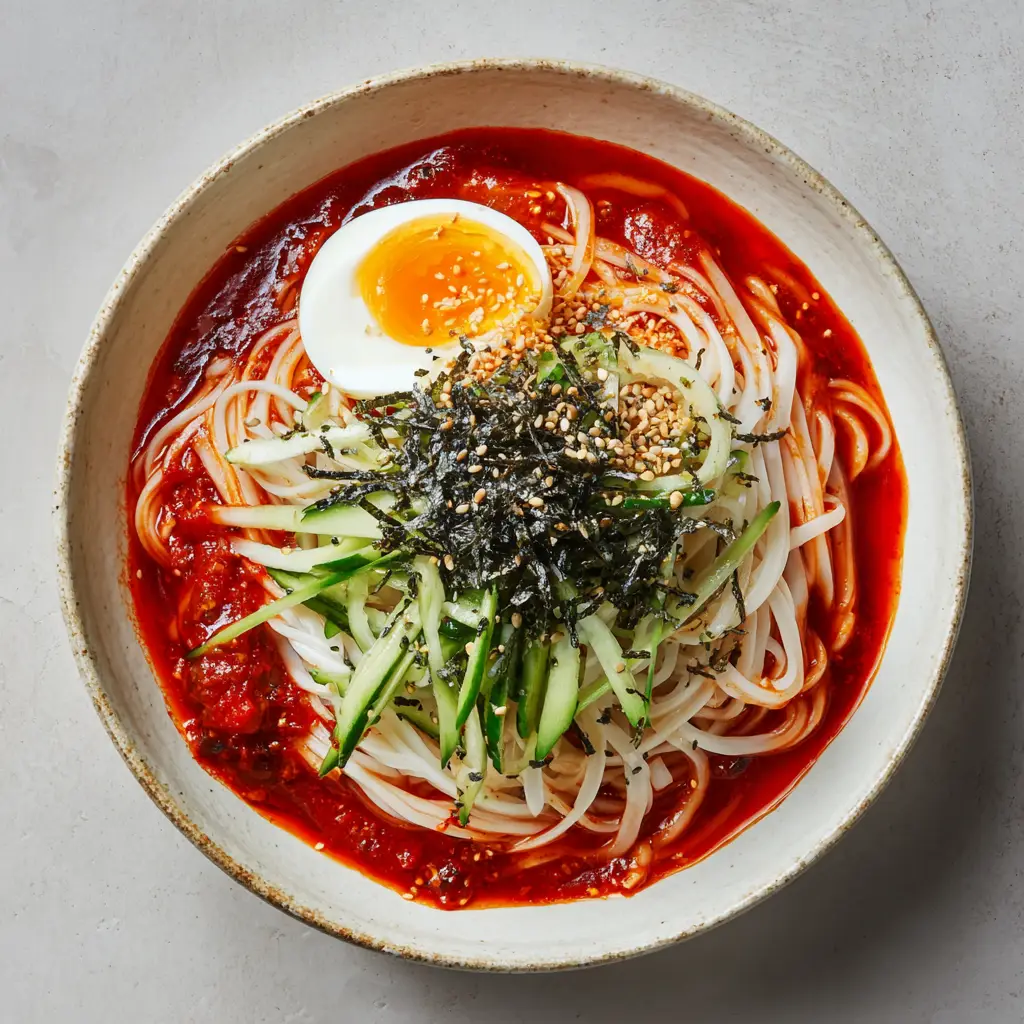
Transfer the coated noodles into a white ceramic bowl. Top with a generous pile of julienned fresh cucumber. Peel the cooled egg, slice it in half vertically, and place one half on top, ensuring the jammy orange yolk is facing upward. Finish with a generous sprinkling of toasted white sesame seeds and fine black dried seaweed flakes scattered across the entire surface.
Expert Tips for the Perfect Bibim Guksu
- The Cold Shock: Never skip the vigorous rinsing of the noodles. If you leave the starch on, the noodles will become a gummy mass instead of the elegant, tangled strands seen in the photos.
- Sauce Maturity: If you have time, make the sauce 30 minutes in advance. This allows the garlic to mellow and the flavors to meld into a more cohesive glaze.
- Cucumber Prep: To keep the cucumber extra crunchy, julienne it just before serving. If you want even more tang, you could serve this alongside homemade refrigerator pickles.
- Egg Peeling: Crack the shell gently all over before peeling under cold water. This helps the shell slip off without damaging the delicate white of the soft-boiled egg.
How to Store and Refresh Leftovers
Bibim Guksu is best enjoyed immediately after assembly. Because the somyeon noodles are thin and porous, they will continue to absorb the sauce over time, which can lead to a softer texture. However, if you have leftovers, store them in an airtight container in the refrigerator for up to 24 hours.
To refresh the dish, add a teaspoon of cold water and a half-teaspoon of sesame oil. Toss the noodles gently to loosen them up and restore that characteristic glossy sheen. Do not freeze this dish, as the noodles and fresh cucumber will lose their structural integrity upon thawing.
What to Serve with Spicy Cold Noodles
This dish is a powerhouse of flavor on its own, but it pairs beautifully with light, refreshing sides. To stay within the realm of fresh produce, a peach burrata salad provides a creamy, sweet contrast to the gochujang heat. Alternatively, for a more traditional meal structure, consider a refreshing shrimp rice bowl as a secondary protein option.
If you are serving this as part of a larger spread, the acidity of an authentic greek salad surprisingly complements the spicy-sweet profile of the Korean noodles by providing a different type of crunch and tang.
Frequently Asked Questions
Yes, you can substitute the wheat somyeon with thin rice noodles or buckwheat noodles (soba). Ensure your gochujang paste is also labeled gluten-free, as some brands use wheat flour as a thickener.
The secret to a reflective, glossy sauce is the inclusion of honey or corn syrup and toasted sesame oil. These ingredients provide a thick viscosity and a beautiful sheen that clings to the noodles.
For a translucent orange, jammy yolk, boil a large egg for exactly 6 minutes and 30 seconds before immediately plunging it into an ice bath to stop the cooking.
Bibim Guksu is traditionally served cold. After boiling the noodles, they are rinsed vigorously in cold water to stop the cooking and remove starch, resulting in a refreshing, chilled dish.
Authentic Bibim Guksu uses somyeon, which are very thin wheat noodles. They have a delicate texture that allows the spicy sauce to coat them thoroughly without feeling too heavy.
The Ultimate Bibim Guksu Recipe
Bibim Guksu: The Ultimate 15-Minute Korean Spicy Cold Noodles
Ingredients
Equipment
Method
- In a medium bowl, combine gochujang, rice vinegar, soy sauce, sugar, honey, sesame oil, and minced garlic. Whisk until smooth and glossy.
- Simmer egg for 6 minutes and 30 seconds, then immediately shock in an ice bath. Peel and slice in half.
- Boil somyeon for 3-4 minutes. Drain and rinse vigorously under cold water to remove starch.
- Add noodles to the sauce bowl and toss until every strand is coated in the crimson sauce.
- Top with julienned cucumber, the soft-boiled egg half, sesame seeds, and seaweed flakes.
Notes
Use a 6.5 minute boil for the perfect jammy egg yolk.
Embrace the Heat and Refresh Your Palate
Mastering Bibim Guksu is a rite of passage for any home cook interested in the bold flavors of Korea. By focusing on the glossy texture of the sauce and the precise “jammy” finish of the egg, you can create a meal that is as visually stunning as it is delicious. The combination of cooling cucumber and fiery gochujang is a timeless balance that never fails to satisfy.
If you enjoyed making this recipe, we would love to hear about it! Leave a comment below with your favorite toppings, and don’t forget to share your creations with us on Pinterest. For more kitchen inspiration and visual recipe guides, be sure to sign up for our newsletter!