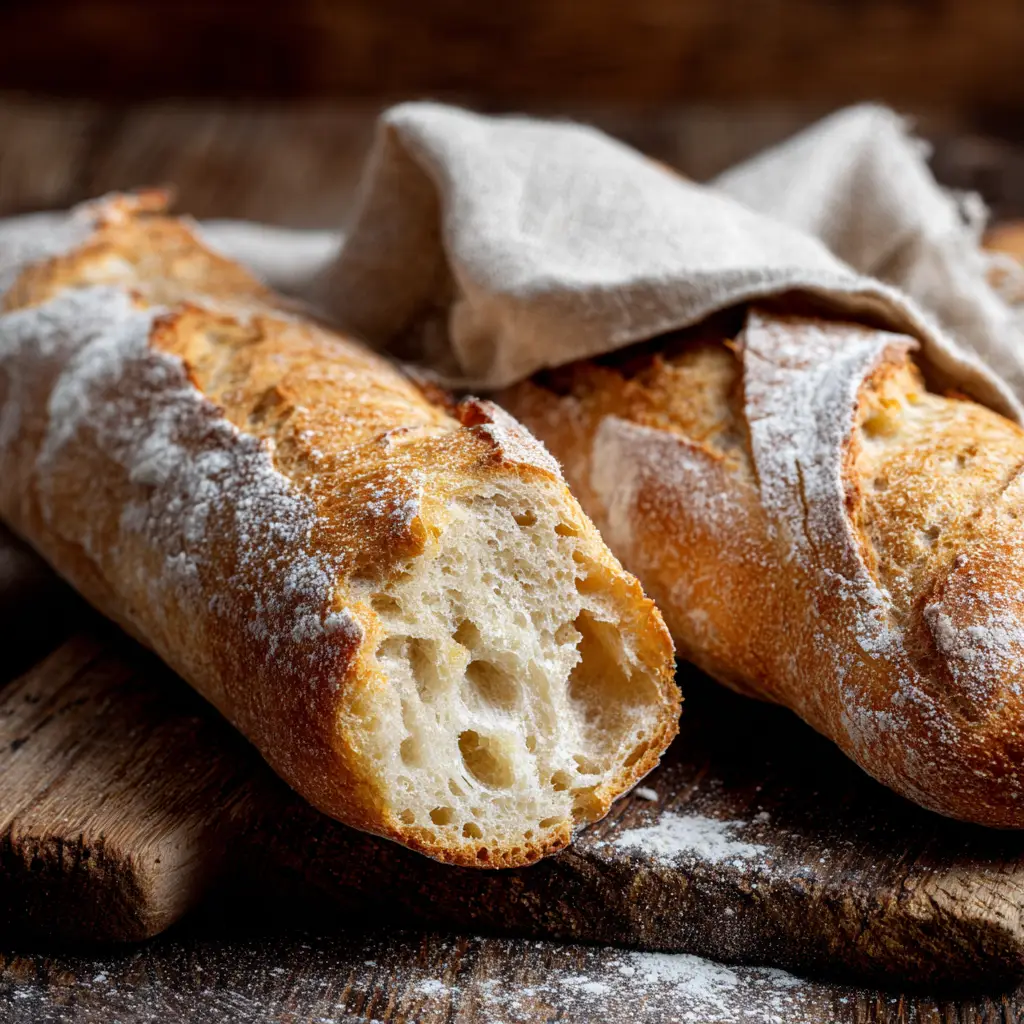
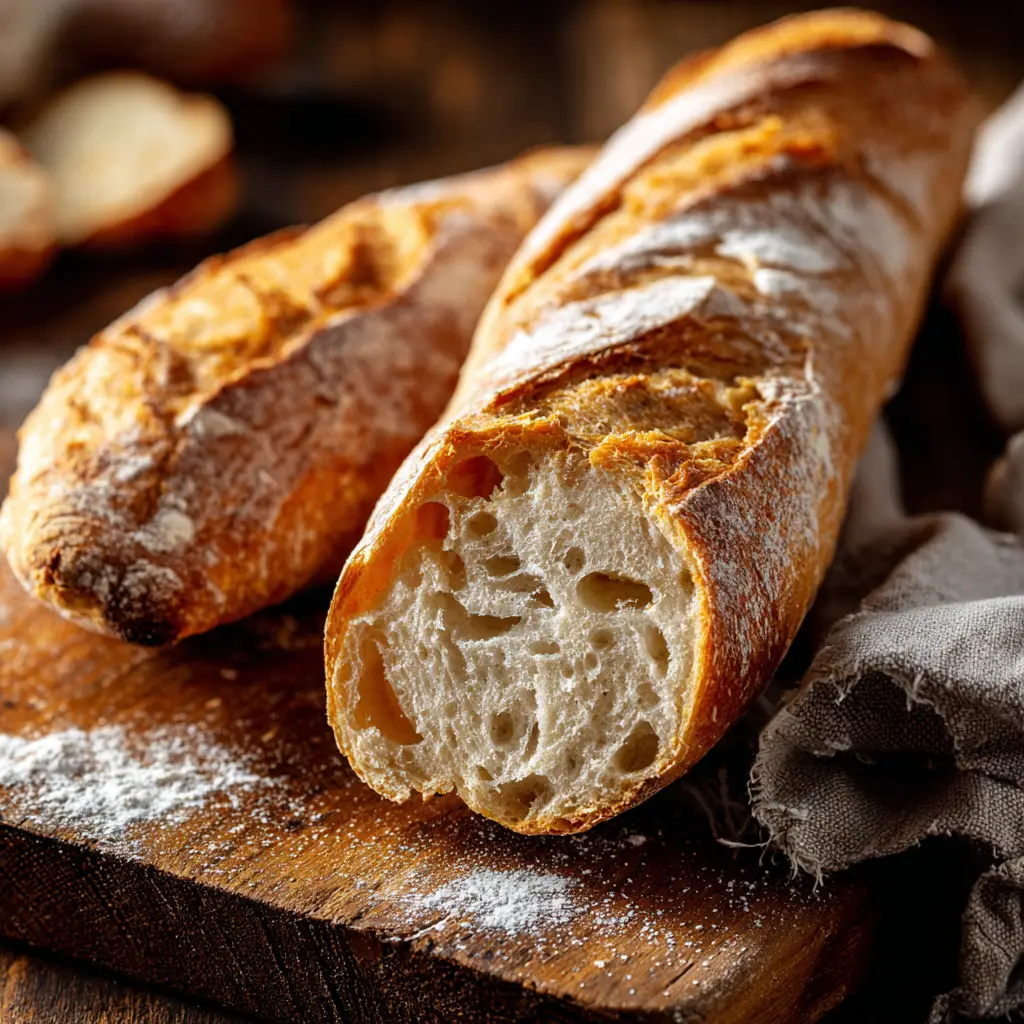
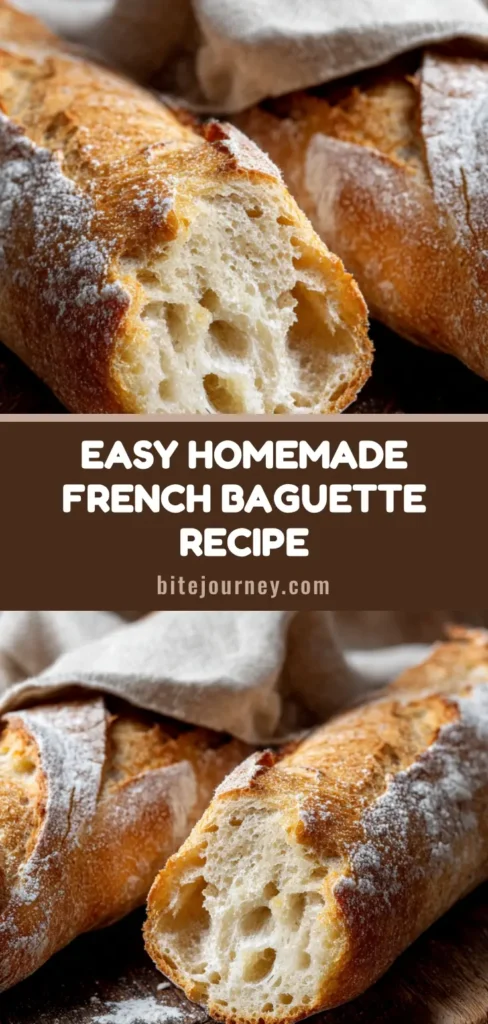
There’s nothing quite like the sensory experience of a truly authentic French baguette recipe. Imagine pulling two perfectly golden brown baguettes from your oven, their crusts crackling a delicate symphony. You place them on a rustic wooden board, a light dusting of flour whispering of their handmade origin. This isn’t just bread; it’s a mouth-watering masterpiece, a slice of Parisian bakery magic you can create in your own bright, natural kitchen lighting.
This recipe is engineered to replicate that exact moment. We’re chasing that hearty, crisp texture, the kind that gives way to a wonderfully airy and open interior crumb. One loaf is sliced, revealing the beautiful network of holes that every baker dreams of. Forget dense, store-bought imitations; this is the real deal.
Why This Recipe Delivers That Bakery-Perfect Crunch
Achieving a professional-level result is about mastering a few key details. This recipe is designed for the enthusiastic home cook to succeed by focusing on what matters:
- A Visibly Crisp Crust: We use a specific combination of high heat and steam to create a shell that is deeply golden-brown, audibly crunchy, and shatteringly delicate.
- An Airy, Open Crumb: The secret is a high-hydration dough and a gentle folding technique that develops gluten without destroying the precious gas bubbles, resulting in that beautiful, open interior you see in the photos.
- Authentic Flavor Profile: A slow, patient fermentation process is key. It allows the simple ingredients to develop a complex, slightly nutty flavor that defines a true French baguette.
- Beginner-Friendly Technique: While the results are professional, the steps are broken down with clear visual and sensory cues, making this the perfect French baguette recipe for those ready to level up their baking skills.
The Four Essential Building Blocks for Your Baguette
The beauty of a classic French baguette recipe lies in its simplicity. You only need four core ingredients to create this masterpiece.
Bread Flour
We use bread flour for its higher protein content, which is essential for developing the strong gluten network needed to trap air and create that chewy, airy crumb. A quality bread flour is the foundation of your loaf’s structure.
Filtered Water
The specific amount of water creates a “high-hydration” dough. This stickier dough is the secret to an open, airy interior, but don’t worry—our instructions make it easy to handle.
Instant Yeast
Instant yeast provides a reliable and vigorous rise, creating the lift needed for that classic baguette shape and texture. It works faster and can be mixed directly with the dry ingredients.
Fine Sea Salt
Salt does more than just add flavor; it also plays a crucial role in controlling the yeast’s activity and strengthening the gluten structure. This results in a more uniform crumb and a well-developed taste.
Essential Tools for Crafting the Perfect Baguette
You don’t need a professional bakery, but a few key tools will make the process much smoother and guarantee a better result.
- Stand Mixer with Dough Hook: While not strictly necessary (you can knead by hand), a mixer makes handling the sticky, high-hydration dough significantly easier.
- Large Bowl: For proofing the dough, giving it ample space to rise.
- Dough Scraper or Bench Knife: Absolutely essential for manipulating and shaping the sticky dough without adding too much extra flour.
- Baking Stone or Steel: This is a non-negotiable for achieving that crisp, golden-brown bottom crust. It holds and radiates intense, even heat.
- Lame or Sharp Razor Blade: For scoring the classic slashes on top of the loaf. This allows the bread to expand properly in the oven, a process known as “oven spring.”
- A Pan for Steam: A simple metal baking pan placed on a lower rack is all you need to create the steam that gives the baguette its signature crust.
Mastering the Art: Your Step-by-Step French Baguette Journey
Follow these steps closely, paying attention to the sensory cues. The process is as rewarding as the final product.
Step 1: Awakening the Dough – The Initial Mix
In the bowl of your stand mixer, whisk together the bread flour, instant yeast, and fine sea salt. Add the warm water. Using the dough hook attachment, mix on low speed for 2-3 minutes, just until a shaggy, sticky dough forms and no dry flour remains. Cover the bowl with plastic wrap and let it rest for 30 minutes. This “autolyse” period allows the flour to fully hydrate, making the dough easier to work with.
Step 2: Building Strength – The Fold and Ferment
After the rest, run the mixer on medium-low speed for 5-7 minutes. The dough will become smoother and more elastic, but will still be quite sticky. Transfer the dough to a lightly oiled large bowl. Let it rise for 1.5 to 2 hours, performing a “stretch and fold” every 30 minutes for the first hour. To do this, wet your hands, grab a portion of the dough, stretch it up, and fold it over the center. Rotate the bowl and repeat three more times. You’ll feel the dough becoming stronger and holding its shape better after each fold.
Step 3: Shaping Your Masterpiece – From Log to Loaf
Gently turn the proofed dough out onto a lightly floured surface. The top of the dough should now be on the bottom. Divide the dough into two equal pieces. Gently pre-shape each piece into a loose log. Cover with a clean linen towel and let them rest for 15-20 minutes. This relaxes the gluten, making final shaping easier. To shape the final baguette, gently flatten one piece of dough into a rectangle. Fold the top third down to the middle and press to seal. Fold the new top edge all the way down to the bottom edge and seal firmly with the heel of your hand. Gently roll the log back and forth, applying light pressure from the center outwards, until it reaches a length of about 15 inches (38 cm).
Step 4: The Final Rise – Patience Before the Heat
Place the shaped baguettes on a piece of parchment paper that has been generously dusted with flour. If you don’t have a baguette pan, you can create a “couche” by bunching up the parchment paper or a linen napkin between the loaves to help them hold their shape as they rise. Cover loosely and let them proof for 30-45 minutes. The baguettes are ready when they look puffy and a gentle poke leaves a small indent that slowly springs back.
Step 5: Scoring and Steaming – The Secrets to a Perfect Crust
While the loaves are proofing, place your baking stone on the middle rack and a metal pan on the bottom rack of your oven. Preheat to 475°F (245°C). Just before baking, use a lame or a very sharp razor blade to make 4-5 decisive, diagonal slashes along the top of each baguette, holding the blade at a 30-degree angle. Carefully slide the parchment with the baguettes onto the hot baking stone. Pour 1 cup (240ml) of hot water into the metal pan on the bottom rack to create steam, and quickly close the oven door. Bake for 20-25 minutes, or until the crust is a deep golden brown and the internal temperature reaches 205°F (96°C). Let cool on a wire rack before slicing to appreciate the airy interior crumb.
Culinary Secrets for Flawless French Baguettes
- Weigh Your Ingredients: For baking, precision is key. Using a kitchen scale to measure your flour and water by weight is the single best way to ensure consistent, perfect results every time.
- Don’t Fear Sticky Dough: A high-hydration dough is the secret to an airy crumb. Use wet hands and a dough scraper to manage it, resisting the urge to add too much extra flour, which can make the bread dense.
- The “Windowpane Test”: To check if your dough is kneaded enough, take a small piece and gently stretch it. If you can stretch it thin enough to see light through it without it tearing, the gluten is perfectly developed.
- Steam is Not Optional: The initial blast of steam is crucial. It keeps the surface of the dough moist, allowing the baguette to expand fully (oven spring) before the crust sets, resulting in a lighter loaf and a crispier crust.
Storing and Reviving Your Homemade Bread
Your homemade baguette is best enjoyed the day it’s baked, especially within the first few hours, to experience its perfect crust. Store any leftovers in a paper bag at room temperature for up to two days. Avoid plastic bags, as they trap moisture and will make the crust soft.
To revive a day-old baguette and bring back its crackly crust, simply spritz it lightly with water and bake in a 375°F (190°C) oven for 5-7 minutes.
Perfect Pairings: What to Serve With Your Fresh Baguette
A fresh baguette is a canvas for countless culinary creations. Of course, it’s heavenly with just a smear of good butter, but it’s also the perfect vessel for a creamy baked spinach artichoke dip.
Use thick slices to build the ultimate sandwich or serve it alongside a hearty Italian pasta salad. For a comforting meal, there’s nothing better than tearing off a piece to dunk into a bowl of a comforting bowl of Greek lemon chicken soup. If you enjoy this style of bread, you might also want to try making our homemade ciabatta bread recipe.
Your French Baguette Recipe Questions Answered
Yes. For a more developed flavor, you can perform a cold ferment. After the first rise and folds, place the dough in a covered bowl in the refrigerator for up to 3 days. Let it sit at room temperature for 1-2 hours to warm up before proceeding with the shaping steps.
No, you don’t need a special pan. You can create a makeshift ‘couche’ by placing the shaped loaves on parchment paper and bunching up a linen towel or the parchment itself between them. This provides support and helps them maintain their shape during the final rise.
Big holes are the result of three things: a high-hydration (wet) dough, proper gluten development through gentle folds instead of excessive kneading, and careful shaping that preserves the air bubbles created during fermentation. Be gentle with the dough in the final stages!
Bread flour is highly recommended for this French baguette recipe. Its higher protein content (typically 12-14%) helps develop a strong gluten structure, which is essential for trapping the gas bubbles that create the characteristic airy and chewy crumb.
The most common reason for a soft crust is a lack of sufficient steam during the initial phase of baking. Creating a steamy environment for the first 10 minutes is crucial. Also, ensure your oven is preheated to a very high temperature (475°F / 245°C) and you’re baking on a preheated baking stone or steel.
Your Printable Guide to the Ultimate French Baguette Recipe
Authentic French Baguette Recipe for a Golden, Crusty Loaf
Ingredients
Equipment
Method
- In a stand mixer bowl, whisk flour, yeast, and salt. Add warm water and mix on low with a dough hook until a shaggy dough forms, 2-3 minutes. Cover and let rest for 30 minutes.
- Knead on medium-low speed for 5-7 minutes until smooth but still sticky. Transfer to a lightly oiled bowl. Let rise for 1.5-2 hours, performing a stretch and fold every 30 minutes for the first hour.
- Turn dough onto a lightly floured surface. Divide into two equal pieces and pre-shape into loose logs. Cover and rest for 15-20 minutes.
- Flatten one piece into a rectangle. Fold the top third to the middle, then fold the new top edge to the bottom and seal. Roll into a 15-inch (38 cm) log. Repeat with the second piece.
- Place shaped loaves on floured parchment paper, using a bunched-up towel between them for support. Cover and let proof for 30-45 minutes until puffy.
- Place a baking stone on the middle rack and a metal pan on the bottom rack. Preheat oven to 475°F (245°C).
- Make 4-5 diagonal slashes on each loaf. Transfer parchment with loaves to the hot stone. Add 1 cup (240ml) of hot water to the metal pan to create steam. Bake for 20-25 minutes until deep golden brown.
- Let cool completely on a wire rack before slicing.
Notes
Don't Fear Sticky Dough: Use wet hands and a dough scraper to manage it, resisting the urge to add too much extra flour.
The "Windowpane Test": To check if your dough is kneaded enough, stretch a small piece until it's translucent without tearing.
Steam is Not Optional: The initial blast of steam is crucial for a light loaf and a crispy crust.
Share Your Baking Triumph!
You’ve transformed four simple ingredients into a stunning, delicious work of art. This French baguette recipe is a testament to the magic of baking, and we know you’ll be proud of the results.
If you’ve enjoyed this culinary journey, please leave a comment and a rating below! We love seeing your creations, so don’t forget to share a photo of your golden-brown masterpiece and tag us on Pinterest!