Welcome to the ultimate guide to creating the most authentic Pastel de Nata Recipe right in your own kitchen. Forget everything you thought you knew about these iconic Portuguese custard tarts. We are about to embark on a journey to replicate that perfect, fresh-from-the-bakery experience—a masterpiece defined by its incredibly flaky pastry and a rich, creamy custard with a signature blistered, caramelized top. This isn’t just a recipe; it’s a sensory experience, capturing the essence of a bright Lisbon morning in every bite.
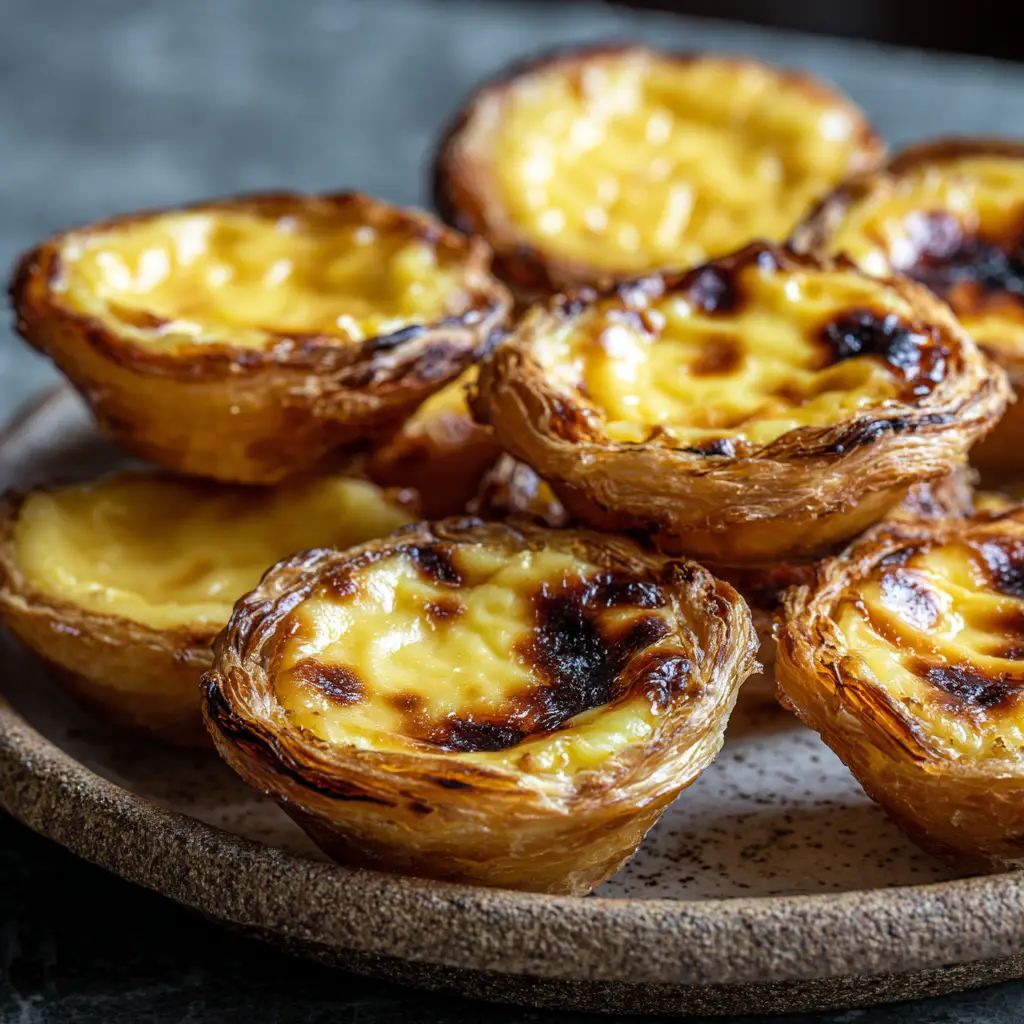
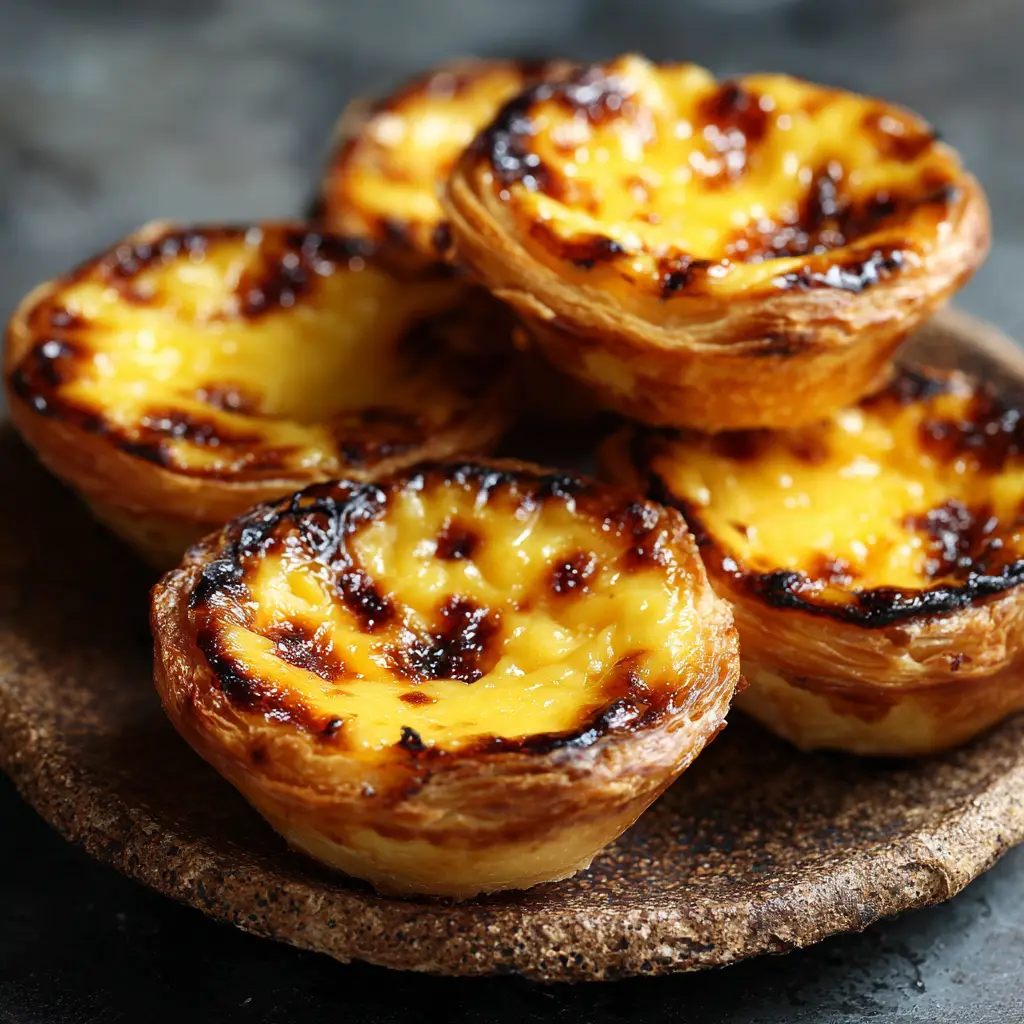
The magic of this dessert lies in its textures and temperatures. The shatteringly crisp, multi-layered pastry shell gives way to a warm, luscious custard infused with subtle hints of lemon and cinnamon. The visual allure, as described in our inspiration, is a close-up of pure culinary art: countless golden-brown layers cradling a rich yellow filling, all under a glossy, perfectly scorched surface. This guide will ensure your final creation is just as appetizing.
The Anatomy of a Perfect Pastel de Nata
- Impossibly Flaky Pastry: Achieve countless, distinct layers that shatter with every bite, creating a delightful textural contrast to the soft custard.
- Rich, Silky Custard: A luscious, creamy filling that’s sweet but not cloying, with a vibrant yellow hue derived from rich egg yolks.
- The Signature Charred Top: Master the high-heat technique that produces the iconic dark, blistered spots, adding a slightly smoky, caramelized flavor that is essential to the authentic experience.
- Authentic Flavor Profile: A delicate infusion of cinnamon and lemon that perfumes the custard, staying true to the traditional Portuguese method.
The Building Blocks for Your Portuguese Tarts
Every ingredient in this Pastel de Nata recipe plays a critical role. Here’s what you’ll need to create perfection.
For the Flaky Pastry Shells:
All-Butter Puff Pastry: Using a high-quality, all-butter store-bought puff pastry is our key to success. This provides the laminated layers necessary for that incredible flaky texture without the multi-day effort of making it from scratch, which you can learn in our homemade croissant recipe.
All-Purpose Flour: This is essential for dusting your work surface. It prevents the delicate pastry from sticking, ensuring you can work with it cleanly to maintain its layered integrity.
For the Rich Custard Filling:
Granulated Sugar: This forms the foundation of a simple syrup that gives the custard its sweetness and glossy finish. The syrup method ensures a perfectly smooth texture without any graininess.
Water: Used to create the simple syrup with the sugar. Precise measurements are key to achieving the right consistency for the custard base.
Cinnamon Stick & Lemon Peel: These are the aromatic soul of the recipe. They infuse the syrup with a warm, spiced, and citrusy fragrance that is quintessentially Portuguese.
Whole Milk: The creamy base of our custard. Whole milk provides the necessary fat content for a rich, full-bodied flavor and velvety mouthfeel.
All-Purpose Flour & Cornstarch: This combination acts as our thickening agent. The flour provides body while the cornstarch ensures a silky, stable set that holds its shape beautifully when baked.
Large Egg Yolks: Using only the yolks is the secret to a vibrantly yellow, rich custard. They provide the color, flavor, and a significant portion of the thickening power.
Vanilla Extract: A dash of pure vanilla extract rounds out the flavors of the custard, complementing the lemon and cinnamon notes perfectly.
Salt: A crucial, if invisible, ingredient. A pinch of salt sharpens all the flavors and balances the sweetness of the custard.
Essential Tools for a Flawless Bake
To achieve the bakery-quality results this Pastel de Nata recipe promises, having the right equipment is key. Here’s what you should have ready:
- Standard 12-cup Muffin Tin: This is what will form the classic shape of your tarts. A metal tin is preferred as it conducts heat effectively, which is crucial for a crispy bottom crust.
- Small Saucepan: For making the infused simple syrup and gently cooking the custard base.
- Rolling Pin: To evenly roll out the puff pastry to the correct thickness before cutting your discs.
- Fine-mesh Sieve: Essential for straining the custard mixture. This step guarantees a perfectly smooth, silky filling by removing any cooked egg bits or aromatics.
- Mixing Bowls & Whisk: Standard kitchen equipment for mixing your custard ingredients.
Crafting Your Authentic Pastel de Nata Recipe: A Step-by-Step Guide
Follow these instructions closely, paying attention to the sensory cues. The process is as rewarding as the final product.
Phase 1: Preparing the Flaky Pastry Cases
First, lightly flour your work surface. Unfold one sheet of puff pastry and gently roll it out to smooth any seams. Starting from the edge closest to you, roll the pastry into a tight log. This rolling action multiplies the layers, which is key to that ultra-flaky texture. Wrap the log in plastic wrap and chill for at least 30 minutes to firm up.
Once chilled, trim the ends of the log. Cut the log into 12 equal ½-inch (1.25 cm) thick discs. Place each disc, cut-side up, into a cup of your muffin tin.
Now, dip your thumb in a small bowl of cold water and press it into the center of a pastry spiral. Gently and evenly press the dough up the sides of the muffin cup, creating a thin tart shell. The rim should be slightly higher than the edge of the tin. Repeat for all 12 and place the tin in the freezer for 15 minutes to chill thoroughly while you make the custard.
Phase 2: Infusing and Building the Custard
In your small saucepan, combine the sugar, water, cinnamon stick, and lemon peel. Bring to a simmer over medium heat, stirring until the sugar is fully dissolved. Let it simmer for one minute, then remove from heat to let the aromatics infuse.
In a separate medium bowl, whisk together the milk, flour, cornstarch, and salt until no lumps remain. Remove the cinnamon stick and lemon peel from the syrup, then slowly stream the hot syrup into the milk mixture, whisking constantly to temper it.
Pour this entire mixture back into the saucepan and cook over medium heat, whisking constantly and scraping the bottom. You’re looking for a specific visual cue: the mixture will thicken to the consistency of a thin pudding. This should take about 5-7 minutes. Do not let it boil. Remove from heat and let it cool for 10 minutes.
Phase 3: Finalizing the Custard and The High-Heat Bake
Preheat your oven to its highest setting, typically 550°F (290°C). Place an oven rack in the upper third of the oven. A scorching hot oven is non-negotiable for achieving the signature caramelized top.
In a small bowl, lightly whisk the egg yolks. Slowly pour about a half-cup of the warm custard base into the yolks, whisking constantly. This tempers the yolks and prevents them from scrambling. Pour the yolk mixture back into the saucepan with the remaining custard and whisk in the vanilla extract until fully combined.
Strain the entire custard mixture through a fine-mesh sieve into a pitcher or measuring cup with a spout. This final step ensures a perfectly silky texture. Carefully fill each chilled pastry shell about three-quarters full.
Bake for 12-15 minutes, or until the pastry is golden-brown and the custard is bubbly with distinct dark brown or blackened spots. The transformation is rapid, so keep a close eye. Let the tarts cool in the tin for 5 minutes before carefully transferring them to a wire rack to cool completely.
Expert Tips for Picture-Perfect Results
- Keep Your Pastry Cold: The key to flaky layers is cold butter. If the pastry gets too warm at any point, don’t hesitate to return it to the fridge or freezer for a few minutes.
- Don’t Overfill the Tarts: Filling the pastry shells only three-quarters full prevents the custard from spilling over and making a mess in your oven. The custard will puff up during baking.
- Know Your Oven’s Hot Spots: For an even bake, rotate the muffin tin halfway through the cooking time. Every oven is different, so the first batch is always a learning experience.
- Strain the Custard, Always: Do not skip the step of straining the custard through a fine-mesh sieve. It is the only way to guarantee a perfectly smooth, restaurant-quality filling.
Preserving the Crisp: Storage & Reheating
Pastéis de Nata are undoubtedly best enjoyed on the day they are made, ideally still slightly warm from the oven. If you have leftovers, store them in an airtight container at room temperature for up to 2 days. Refrigeration will soften the pastry.
To revive their crispy texture, reheat them in an oven or air fryer at 350°F (175°C) for 3-5 minutes. Freezing is not recommended as it compromises the delicate textures of both the pastry and the custard.
What to Serve With Your Homemade Tarts
These tarts are a star attraction and need little accompaniment. A simple cup of coffee or an espresso is the traditional pairing. However, if you’re building a larger spread of treats, they sit wonderfully alongside other baked goods. For a savory contrast after your sweet indulgence, consider a simple and hearty meal like our Black Beans and Rice with Sausage. And if you’re looking for more dinner ideas, our list of easy lazy dinners has plenty of inspiration.
Your Questions, Answered
Here are some common queries that arise when tackling this Pastel de Nata Recipe.
Absolutely! This recipe is designed to be used with a high-quality, all-butter store-bought puff pastry. It provides the necessary flaky layers and makes the recipe much more accessible for home cooks.
Pastel de Nata is the generic name for Portuguese custard tarts. Pastéis de Belém are the original version made at a specific bakery in Belém, Lisbon, since 1837. Their recipe is a closely guarded secret, but all other versions are called Pastéis de Nata.
The signature dark, blistered spots are a result of baking the tarts at a very high temperature (550°F / 290°C). The intense heat caramelizes the milk and sugar solids on the surface of the custard, creating that iconic look and flavor.
A runny custard is typically due to undercooking the custard base on the stovetop. It’s crucial to whisk constantly until it visibly thickens to the consistency of a thin pudding before you temper in the egg yolks. This ensures the starches are activated properly.
The Only Authentic Pastel de Nata Recipe You’ll Ever Need
You now hold the keys to creating one of the world’s most beloved pastries. This recipe, when followed with care, will produce tarts that look and taste like they came straight from a Lisbon café. Enjoy the process and the delicious results.
Authentic Pastel de Nata Recipe for a Flawless Bake
Ingredients
Equipment
Method
- Lightly flour your work surface. Unfold puff pastry, roll into a tight log, wrap in plastic, and chill for 30 minutes.
- Cut the chilled log into 12 ½-inch (1.25 cm) discs. Place each disc in a muffin cup. Using a wet thumb, press the dough from the center up the sides to form a thin shell. Freeze the tin for 15 minutes.
- In a saucepan, simmer sugar, water, cinnamon stick, and lemon peel until sugar dissolves. Let infuse off the heat.
- In a bowl, whisk milk, flour, cornstarch, and salt. Remove aromatics from syrup and slowly whisk hot syrup into the milk mixture. Return to saucepan and cook over medium heat, whisking constantly, until thickened to a thin pudding consistency (5-7 minutes). Cool for 10 minutes.
- Preheat oven to 550°F (290°C). Temper egg yolks by whisking in a small amount of the warm custard base, then whisk the yolk mixture and vanilla into the main custard batch.
- Strain the custard through a fine-mesh sieve. Fill each chilled pastry shell three-quarters full. Bake for 12-15 minutes until the pastry is golden and the tops are blistered and caramelized. Cool slightly before serving.
Notes
Don't Overfill the Tarts: Filling the pastry shells only three-quarters full prevents the custard from spilling over.
Know Your Oven's Hot Spots: For an even bake, rotate the muffin tin halfway through the cooking time.
Strain the Custard, Always: This step is mandatory for a perfectly smooth, restaurant-quality filling.
Join the Culinary Conversation!
Did you make this Pastel de Nata Recipe? I would love to see your creations! Share your experience in the comments below or tag us on Pinterest. Your feedback helps our community of home cooks grow and learn together. Happy baking!